
by Carl Conetta, PDA Briefing Report #20, 18 January 2010. Analyzes the steep rise in defense spending since 1998. 21 charts and tables.
Carl Conetta
Helicopters in America’s post-9/11 wars
Carl Conetta, Project on Defense Alternatives, Sep 2008 HTML | PDF
This article is a chapter in Lutz Unterseher, Military Intervention and Common Sense: Focus on Land Forces (Berlin-Greifswald: Ryckschau, 2008.)
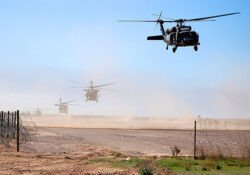 Drawing on the experiences of the Afghanistan and Iraq wars, the article assesses the role played by helicopters, reviewing their strengths and limits. The author suggests that a dilemma shadows the use of these aircraft. On the one hand, they offer a unique combination of mobility, flexibility, and agility in working closely with ground forces, providing reconnaissance, fire, maneuver, and logistical support. However, helicopters prove acutely sensitive to environmental conditions, are relatively fragile, and can be countered by multiple, relatively-inexpensive weapon systems.
These problems can be partially mitigated, but only in ways that substantially increase costs while narrowing the scope of the crafts’ usability. This has undercut notions of using helicopters in deep attack roles and large-scale helicopter assaults.
The article concludes by examining cost-effective roles for helicopters in combat. And it asks, Do tilt-rotor aircraft offer a viable alternative?
Toward a Sustainable US Defense Posture: An Option to save $60+ Billion Over Five Years
(printable PDF version) (HTML version) by Carl Conetta, PDA Briefing Memo #42, 02 August 2007. Fiscal realities and public opinion may compel a cut in US defense spending. This memo outlines a modest option for savings to be realized by reducing fighter aircraft wings and aircraft carrier fleets.
The Near Enemy and the Far: The Long War, China, and the 2006 US Quadrennial Defense Review
by Carl Conetta, 01 November 2006. ➪ HTML ➪ PDF. An edited version of this analysis appeared in the July 2006 issue of the World Policy Journal with the title Dissuading China and Fighting the ‘Long War’ (PDF).
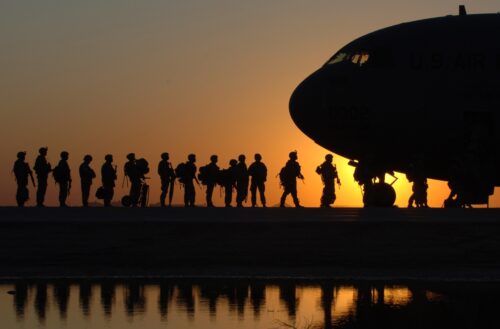
The 2006 US Quadrennial Defense Review advanced two new strategic vectors for the US armed forces – one targeted a putative “global Islamic insurgency,” the other put America on a collision course with China.
We Can See Clearly Now: The Limits of Foresight in the pre-World War II Revolution in Military Affairs (RMA)
 by Carl Conetta
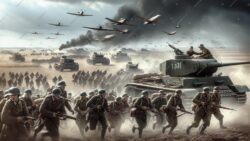
“Military transformation” and the idea of a “Revolution in Military Affairs” are prominent themes in US defense planning. However, the example of revolutionary change during the Second World War suggests that forecasting such revolutions poses a daunting, if not insurmountable challenge.
QDR 2006: Do The Forces Match the Missions? DOD Gives Little Reason to Believe
(printable PDF version) (HTML version) by Carl Conetta, PDA Briefing Memo #36, February 2006. The 2006 Quadrennial Defense Review sets out ambitious new goals and missions for the US armed forces, but fails to clarify the link between missions, assets, and budgets.
Is there a new warfare?
 Carl Conetta, EPS Quarterly, Nov 2005 – Full Text: PDF
The article critically examines the hypothesis that the 2001 Afghanistan and 2003 Iraq wars show evidence of the United States practicing a new form of warfare based on precision attack and new information technologies. What are these capabilities and do they live up to their promise? Based on the Presentation “Is There a ‘New Warfare’? America’s post-9/11 Wars and the Meanings of Military Transformation,” MIT Security Studies Program Seminar Series, 15 Sept 2004.
Arms Control in an Age of Strategic and Military Revolution
(printable PDF version) (HTML version) by Carl Conetta, Presentation to Einstein Forum, Berlin, 15 November 2005. Changes in the nature of warfare, military technology, and the global strategic environment pose new challenges for arms control. The article critically examines new forms of strategic warfare, cyberwar, so-called “precision” conventional warfare, and less lethal weaponry.
The Development of America’s post-Cold War Military Posture: A Critical Appraisal
By Carl Conetta, 07 November 1996.
➪ HTML
➪ PDF
This article outlines the factors influencing and distorting military planning (with special attention to the 1992-1996 period.)
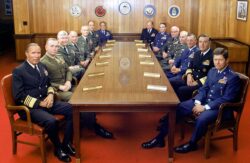 In the early years of the post-Cold War era, the US defense establishment set out to formulate a new military posture. This was supposed to reflect the new strategic environment and pursue the opportunities afforded by advances in information technology. The result, however, was a “new” posture closely resembling the old, writ somewhat smaller. It was to be progressively bolstered by cutting-edge technology inputs. However, while remarkably expensive, these inputs would only partially fulfill their promise, while exhibiting varying degrees of reliability and sustainability. Soon the USA would be spending as much and more inflation-adjusted dollars on its armed forces as during the Cold War. Also driving requirements and budgets upward would be the adoption of new strategic goals, roles, and missions exceeding those of the Cold War period.
Over subsequent decades, the tension between purported military requirements and resources constraints would grow acute, while the armed forces found themselves over-extended worldwide and mired in seemingly endless wars, despite their presumed (and costly) advantages. How did US defense policy come to this point? The Development of America’s post-Cold War Military Posture shows how dysfunctional planning assumptions and processes can easily lead to dysfunctional policy.
Air Power Promises and Modernization Trends after Operation Desert Storm
by Alan Bloomgarden and Carl Conetta, Dec 1994.
➪ HTML
➪ PDF
This article first appeared in 1994 in a slightly edited form in Hawk Journal, the annual publication of the Royal Air Force Staff College.
The expectation of an airpower revolution began in earnest soon after victory in the first US-Iraq Gulf War, 1990-1991. Drawing extensively on official and outside expert assessment of airpower in “Operation Desert Storm,” this article critically reviews the evidence for an airpower revolution while summarizing a range of contemporary opinions on the issue.
Specifically, the article examines three claims advanced by airpower enthusiasts at the dawn of the post-Cold War period: that the Gulf War experience suggests greatly expanded options for limited-aims “raiding missions,” strategic bombing campaigns, and airpower dominance over the ground battle (using improved battlefield interdiction and close air support.)
Included are summaries of the extensive Gulf War Air Power Survey and other surveys of the war which provide an unsurpassed view of the war’s dynamics. It also examines the technologies, contemporary and in development, central to the putative airpower revolution.
