
By Lutz Unterseher, guest publication, February 2026. ➪ see full-text: HTML | PDF
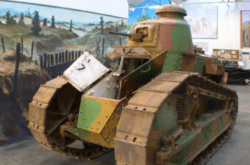
In this paper, Unterseher surveys the evolution of anti-tank warfare—from artillery, mines, infantry weapons, and guided missiles to drones, precision munitions, and networked reconnaissance—and shows how modern defenses increasingly exploit top attack, long range, and coordinated fire. It then traces the tank’s history from World War I through the Cold War, emphasizing how armored forces repeatedly adapted to countermeasures and doctrinal change. The author concludes that large independent tank formations are less survivable today, especially under ubiquitous drone surveillance and precision fires, but tanks still matter when integrated into an overall defensive structure. The likely future is a battlefield with greater emphasis on networked defenses employing agile engineering, lighter forces, precise artillery, drones, and fewer tanks as time goes by.