By Lutz Unterseher, guest publication, February 2026. ➪ see full-text: HTML | PDF

By Lutz Unterseher, guest publication, February 2026. ➪ see full-text: HTML | PDF

History does not teach lessons. Lessons are distilled at best, often selectively. The standard lesson of the 1938 Munich Agreement is that any compromise with aggression will lead to more aggression. But the danger of “conciliation” or “appeasement” admits degrees depending on the circumstances or genesis of the violation and the security arrangements that follow conflict. The counsel of Munich needs to be contextualized, as the following articles argue:
Stephen M. Walt, “Appeasement Is Underrated,” Foreign Policy (29 April 2024)
Mark Episkopos, “It’s time to retire the Munich analogy,” Responsible Statecraft, 13 Dec 2024.
Andrew Latham, “This is not 1938 — so stop talking about appeasement,”The Hill (16 Dec 2021)
Tom Switzer, “In defence of (occasional) appeasement,” The Quadrant, US Studies Center, University of Sydney, 6 Oct 2015.
Geoffrey Wheatcroft, “On the Use and Abuse of Munich,” TNR (3 Dec 2013).
Fredrik Logevall and Kenneth Osgood, “The Ghost of Munich: America’s Appeasement Complex,” World Affairs Journal (July / August 2010)
Marisa Morrison, “The Misappropriation of Munich,” The National Interest (3 Nov 2006)
Jeffrey Record, Appeasement Reconsidered: Investigating the Mythology of the 1930s (Carlisle PA: US Army War College, 2005) h
Samuel Azubuike, “To Appease or to Concede? Contrasting Two Modes of Accommodation in International Conflict,” International Relations, Vol 20, No 1 (Mar 2006)
Daniel Treisman, “Rational Appeasement,” International Organization, Vol. 58, No. 2 (Spring, 2004)
Jeffrey Record, Perils of Reasoning by Historical Analogy: Munich, Vietnam, and American Use of Force since 1945, Occasional Paper No. 4 (Maxwell AFB, Alabama: Center for Strategy and Technology, Air University, March 1998) – PDF file

By Lutz Unterseher, guest publication, 01 January 2026. ➪ see full-text: PDF
This essay argues that wars do not result from immutable human nature but from political motives, cultural dispositions, and calculations of military opportunity. Wars are, therefore, preventable. The essay presents a succinct causal model of war’s outbreak.
The formal causal argument:
War’s outbreak is treated as the dependent variable; the independent variable is a mix of expansionist or preventive motives and a supportive war culture that glorifies offensive action and soldierly virtues (the “cult of the offensive”).
Because such motives and cultures often do not lead to war, a further “sufficient condition” is posited: leaders must judge that a rapid victory is feasible, casualties acceptable, and domestic opposition manageable, typically by identifying structural vulnerabilities or “open flanks” in the opponent’s posture.
This feasibility variable is an intermediate link between motives/culture and war and is filtered through perceptions often distorted by ideology, institutional dysfunction, or poor intelligence.
Empirical illustrations of opportunity and miscalculation:
Drawing on John Mearsheimer’s study of deterrence failure, the text notes that conventional deterrence often fails when states concentrate on offensive or counteroffensive preparations and neglect robust territorial defense, thereby offering exploitable weak points.
The German offensive through the Ardennes in 1940 exemplifies this: France’s incomplete Maginot Line and the misdeployment of its most modern forces created an open flank that German armored units exploited, enabling a rapid breakthrough.
Policy lesson: defense posture and gendered perceptions:
The author’s policy inference is that states should avoid inviting attack by concentrating forces for offensives and instead establish “defensive control of space”: dispersed, resilient, terrain‑using dispositions that leave no open flanks and sap an intruder’s speed and momentum, an idea linked to Confidence‑Building Defense concepts.
Such structurally deterrent postures may be undervalued because of the gendered coding of offense as active and initiative‑rich masculinity, versus the coding of defense as inactive and passive femininity, leading offensive‑minded and sexist elites to discount the real capacity of defensive systems to frustrate attacks.
➪ see full post: PDF
by Lutz Unterseher, PDA Guest Publication (English translation), February 2025.
In nine concise pages, German military analyst Lutz Unterseher provides the strategic orientation, operational modalities, force allocations, institutional framework, overall personnel requirements for active duty and reserves, command organization, and armament composition of an integrated European Union armed force. He then provides a budget for the component parts. The total annual cost is €170 billion, 1% of EU nations’ GDP.
Unterseher concludes:
It is hardly accidental that the European Union was chosen as the political framework for this force model. Above all, that is because, given Trump-era U.S. policy, NATO in its Atlantic-partnership sense no longer exists.
Whether a self-confident “Euro-NATO” can emerge under American pressure and attempts to sow division remains highly questionable. It does, however, seem wise to “carry over” NATO’s infrastructure and communication networks into the authentically European armed forces wherever possible.
see also: European Armed Forces of Tomorrow: A New Perspective, (printable PDF version) (HTML version) (Leicht gekuerzte deutschsprachige Fassung der Studie) by Lutz Unterseher. English version. PDA Guest Publication, 20 October 2003.
➪ see full post: PDF
by Lutz Unterseher, PDA Guest Publication, LIT, Berlin, (English translation), 2025.
From the author’s introduction:
This volume presents a collection of essays on the history and more recent developments of the battle tank and other armored platforms. In general, these contributions adopt a critical tone and occasionally resort to unvarnished sarcasm—after all, the aim is to keep a measured distance from what are ultimately instruments of killing—rather than to slip into the enthusiasm of an aficionado. Nevertheless, readers will find ample factual information and exploration of relevant contexts throughout.
The collection comprises essays published between 2000 and 2023. Some have been shortened or revised but are not fully updated, remaining true to the time of their initial publication. Because these are essay-style pieces, extensive scholarly apparatus has been dispensed with.
by Lutz Unterseher, PDA guest publication, Berlin, LIT Publishing, March 2024. ➪ download (free) book: PDF
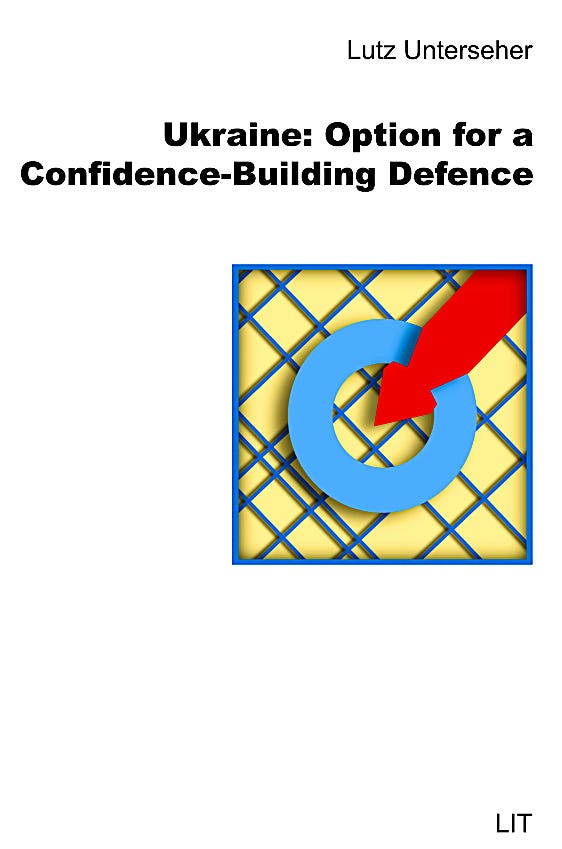
PDA is pleased to offer Lutz Unterseher’s book Ukraine: Options for a Confidence-Building Defense in English for the first time.

International politics looks grim for Ukraine — The country has lost the U.S. as its primary war sponsor.
Ukraine must discover and adopt new means to secure itself quickly.
This book offers a military security option for Ukraine that “helps people to help themselves.”
Untersher continues,
It is about self-sustaining, emphatically defensive military protection: without integration into a military alliance and suitable as a possible building block of an all-European security system.
For more about this book, see https://comw.org/pda/ukraine-a-future-with-a-self-sustaining-defense/
For a sketch of an all-European military security system see: “European Army”: A Thought Experiment
⇒ see full post: HTML
by Carl Conetta, updated 02 April 2022
How do the two sides in the Russia-Ukraine conflict compare in terms of personnel and equipment losses? These seemingly objective measures are subject to an intensive propaganda war. This brief analysis examines multiple sources of data to find that the combatants are actually not far apart in the percentage of equipment attrition they have suffered. And Russian personnel fatalities are likely in the range of 3,500 (April 2). Contrary to the messaging of the two sides, both would seem able to sustain combat for a considerable time longer. Unfortunately, as Russian forces have transitioned to a heavier, more firepower-dominant mode of warfare, Ukrainian civilians and civilian infrastructure are suffering more death and destruction. While this might argue for increased emphasis on war containment and diplomatic efforts, the most evocative messaging on the western side emphasizes Russian miscalculation and fumbling, Ukraine’s adept resistance, and the promise of war termination via increased investment in the war.


by Charles Knight and Carl Conetta, 01 February 2021 (revised 15 March 2022.)
Adapted from Carl Conetta, Charles Knight, and Lutz Unterseher, “Building Confidence into the Security of Southern Africa,” PDA Briefing Report #7. Commonwealth Institute, 1996.
By bringing military structures into line with defensive political goals, the non-provocation standard facilitates the emergence of trusting, cooperative, peaceful political relations among nations. In contrast, any doctrine and force posture oriented to project power into other countries is provocative — unless reliably restrained by political and organizational structures.
by Charles Knight and Lutz Unterseher, Lit Verlag, Munster, Germany, April 2020.
➪ full book PDF
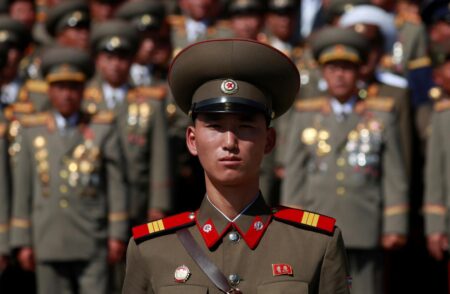
Chapter: “A Path to Reductions of Conventional Forces on the Korean Peninsula” by Charles Knight.
➪ read full English text: PDF or ➪ Korean auto-translation (DeepL)
Varied incremental steps that embody and signal the accumulating commitment to a minimally acceptable common political future for Korea are key to this process. Progressive reduction of cross-border invasion threats through mutual confidence building force restructuring will constitute a virtuous circle of reinforcement for a changed relationship. [Through the] accumulation of the sunk costs of iterative reciprocity North and South Korea will arrive at a point where the demonstrated commitment to smaller restructured military postures is sufficient to allow rapid progress toward a stable level and disposition of arms compatible with a new peaceful political relationship. ~ Knight
Die Konfrontation auf der Halbinsel, mit offensivir Oreintierung und Bereitschaft zur Praemption, impliziert Stabilitatsrisiken. Diese werden noch erhoht durch Entwicklung und Einfuhrung prazier ballistischer Raketen, welche die Illusion nahren, den Gegner im Konfilktfall ‘enthaupten’ zu konnen. ~ Unterseher
Final Report of the Sustainable Defense Task Force of The Center for International Policy, June 2019. ➪ full report PDF
Carl Conetta contributed analysis of the economic and climate change challenges, details of the threat assessment, the strategy, and the calculation of savings from recommended changes to force structure.

The United States must partner with other nations in addressing challenges like climate change, epidemics of disease, nuclear proliferation, and human rights and humanitarian crises. None of these challenges are best dealt with by military force. Rather, they will depend on building non-military capacities for diplomacy, economic assistance, and scientific and cultural cooperation and exchange which have been allowed to languish in an era in which the military has been treated as the primary tool of U.S. security policy.
➪ read the full post HTML
by Charles Knight, a version of this article appeared in The National Interest on 19 February 2019. This is a modestly revised version.
Complemented by:
“A Path to Reductions of Conventional Forces on the Korean Peninsula” by Charles Knight, 2020.
➪ full English text: PDF or ➪ Korean auto-translation (DeepL)

The status quo is a failed approach to Korean conflict and tension; a failed policy that is at least partially responsible for North Korea becoming a small but real nuclear power.
Rather than continue to isolate North Korea, the new realities require America to bring nuclear North Korea into as close a relationship as possible—so that there are opportunities to influence the North in regards to responsibly and safely managing its nuclear weaponry. It is hard to imagine such trust between North Korea and the United States at this time, but the United States can encourage China to play a role in persuading North Korea. Chinese and American interests align very closely regarding nuclear safety and restraint.
by Lutz Unterseher, PDA Guest Publication, August 2018. ➪ PDF
Secretary-General Gorbachev’s astounding and pivotal speech to the UN General Assembly in December of 1988 announced substantial reductions and defensive restructuring of Soviet conventional forces in Eastern Europe.
Lutz Unterseher, living at that time in Bonn, West Germany, was a leading developer of the concepts of the confidence-building restructuring of armed forces intended to reduce East-West military tensions and improve crisis stability. There is no doubt that some of these concepts were influential with Soviet officials in Gorbachev’s closest circles. This article is Lutz Unterseher’s recollection of some of his most consequential interactions with Soviet analysts and diplomats in the several years before Gorbachev’s announcement of the force reductions and restructuring.
➪ HTML transcript
➪ Audio immediately below
by Carl Conetta, PDA Briefing Report #21, 14 November 2012. 9 tables. The appendix provides an additional 18 tables and charts addressing personnel, force structure, and budgets.
➪ PDF ➪ summary PDF ➪ appendix of tables and charts PDF.
Argues for a new balance among the various instruments of national power reflecting today’s strategic conditions. Taking a realistic view of security needs, the report advocates a military 20% smaller than today’s. It advances a “discriminate defense” strategy that would focus the military on cost-effective missions and save $550 billion more than official plans over the next decade.
Carl Conetta, Project on Defense Alternatives, Sep 2008 HTML | PDF
This article is a chapter in Lutz Unterseher, Military Intervention and Common Sense: Focus on Land Forces (Berlin-Greifswald: Ryckschau, 2008.)
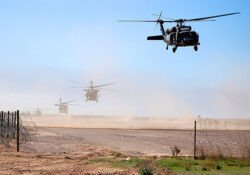
Drawing on the experiences of the Afghanistan and Iraq wars, the article assesses the role played by helicopters, reviewing their strengths and limits. The author suggests that a dilemma shadows the use of these aircraft. On the one hand, they offer a unique combination of mobility, flexibility, and agility in working closely with ground forces, providing reconnaissance, fire, maneuver, and logistical support. However, helicopters prove acutely sensitive to environmental conditions, are relatively fragile, and can be countered by multiple, relatively-inexpensive weapon systems.
These problems can be partially mitigated, but only in ways that substantially increase costs while narrowing the scope of the crafts’ usability. This has undercut notions of using helicopters in deep attack roles and large-scale helicopter assaults.
The article concludes by examining cost-effective roles for helicopters in combat. And it asks, Do tilt-rotor aircraft offer a viable alternative?

by Lutz Unterseher, Berlin-Greifswald: Ryckschau, 2008. Foreward by Charles Knight. Includes a chapter by Carl Conetta, Helicopters in the US wars since 9/11. PDF | order paperback
[from the Foreward]
“This book…makes a major contribution to undoing the confusion for one class of increasingly likely 21st Century uses of military force. That is, internationally sanctioned military intervention using greater force than traditional peace-keeping and less than ‘war-fighting’.”
by Carl Conetta, World Policy Journal, 01 July 2006. ➪ PDF
The 2006 US Defense Review advanced two new strategic vectors for the US armed forces – one targets a putative “global Islamic insurgency”; the other puts America on a collision course with China.
(A longer version of this article was published in November 2006 under the title The Near Enemy and the Far: The Long War, China, and the 2006 US Quadrennial Defense Review.)
Subduing resistance and guarding the peace in modern interventions requires high-quality infantry, but it is erroneous to think the job could be done by elite SOF forces because there can never be enough of these. The vast majority of the all-volunteer armies in the industrial West face a problem when it comes to attracting sufficient personnel: relatively few recruits are good enough to receive the more demanding training needed — creating a dilemma that has rarely been addressed and one that certainly is yet to be solved by today’s armies.
Carl Conetta, EPS Quarterly, Nov 2005 – Full Text: PDF
The article critically examines the hypothesis that the 2001 Afghanistan and 2003 Iraq wars show evidence of the United States practicing a new form of warfare based on precision attack and new information technologies. What are these capabilities and do they live up to their promise? Based on the Presentation “Is There a ‘New Warfare’? America’s post-9/11 Wars and the Meanings of Military Transformation,” MIT Security Studies Program Seminar Series, 15 Sept 2004.