Noted: What North Korea wants in nuclear arms negotiations

by Charles Knight. This was a comment to an article by Duyeon Kim, “How to tell if North Korea is serious about denuclearization,” Bulletin of the Atomic Scientists, 29 October 2018, midway between the Singapore Summit and the Hanoi Summit.  ➪ HTML

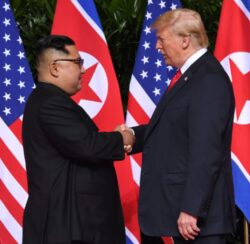
Kim meets with Trump

… productive negotiations must take account of North Korea’s de-facto status as a nuclear weapon state and its core security interests.

Noted: What North Korea wants in nuclear arms negotiations

by Charles Knight

Following is a comment to an article by Duyeon Kim, “How to tell if North Korea is serious about denuclearization,” Bulletin of the Atomic Scientists, 29 October 2018, midway between the Singapore Summit and the Hanoi Summit.

This comment makes one key point that many American analysts ignore:

North Korea has in the past and will now insist that negotiations about Korean nuclear disarmament include any regional nuclear capabilities which it considers to be threats to its security.  In this comment, I am not taking a position on what the particular outcome of nuclear disarmament negotiations should be.  Rather, I am saying that productive negotiations must take account of North Korea’s de-facto status as a nuclear weapon state and its core security interests.

Kim meets with Trump

Ms. Kim’s analysis of what might constitute serious “denuclearization” steps by North Korea would be quite useful if the issue was unilateral disarmament of the North. Quite clearly though, the context of negotiations is “denuclearization of the peninsula” which includes changes in the military postures of South Korea and the United States.

At this early stage of negotiations North Korea, South Korea, and the U.S. are assiduously avoiding discussing these important complicating factors, yet productive discussions about “peninsular disarmament” will determine whether there will eventually be denuclearization of North Korea.

We can not expect North Korea to give up nuclear weaponry (and certainly not irreversibly) unless it no longer faces a threat of nuclear weapons in and about the Korean Peninsula. The North Koreans appear to be realists in this regard. No paper treaty or written assurances will substitute for changes in hardware available to potential enemies.

It is time for analysts in the U.S. to face the reality of a nuclear-armed North Korea unlikely to disarm itself until there are decades of peace and good relations with its neighbors, including South Korea, China, Russia, Japan, and the US Navy and Air Force.

Here are some things that North Korea logically will ask for along the way to disarmament: equivalent international inspections and fissile material controls in South Korea (and even Japan); no nuclear-capable aircraft or ships visiting South Korea; no nuclear sea-launched cruise missiles deployed on US ships within range of North Korea; no intermediate-range nuclear missiles in the region… These are a few of the things North Korean negotiators are likely to get around to mentioning in terms of their judging whether the U.S. and South Korea are “serious about denuclearization.”

What to Look For in the Pyongyang Inter-Korean Summit

by Charles Knight, The Diplomat, 14 September 2018.  HTML

“Denuclearization, if it occurs, is a long-term project. It will not happen in the case of Korea unless there are very substantial reductions and redeployments of conventional weaponry and military units on the peninsula.
“Just think of North Korea’s long-time substitute for nuclear weapons — its thousands of artillery pieces dug in and aimed toward Seoul. And these days South Korea has hundreds of conventionally-armed rockets aimed at key facilities in the North. All of this has to change, in a step-by-step reciprocal and verified process as trust builds. This is the hard part of making peace. It takes time and persistent will.”

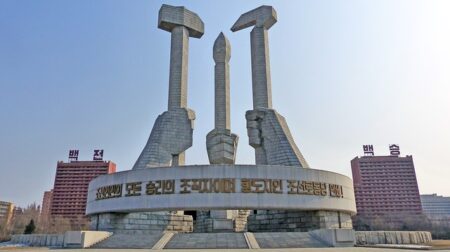
Pyongyang monument

Image by Peter Anta from Pixabay.

The Inter-Korean Summit Declaration of April 27, 2018: a review in detail

by Charles Knight, Project on Defense Alternatives, 01 May 2018. PDF

prayers for peaceThe April 27, 2018 Inter-Korean Summit was a visibly cordial event. At its conclusion, North and South Korea released a Declaration of Peace, Prosperity, and Unification. This paper reviews a selection of key sections and phrases in ‘The Declaration’ with attention to understanding their implications for the goal declared by both parties of ending ‘division and confrontation’ on the peninsula and for addressing the overhanging issue of denuclearization. Notably, both parties strongly assert their rights as Koreans to take leadership in this task.

What Will Success at the Inter-Korean Summit Look Like?

HTML by Anastasia O. Barannikova, English edits by Charles Knight, The Diplomat, 24 April 2018.
 

“Much will depend on U.S. readiness to negotiate and its willingness to adapt to the changing international conditions in northeast Asia. With an improvement of U.S.-North Korea relations, tensions in the region will not disappear, but instability will be more manageable and there will be less risk of a war engulfing Korea and beyond.”

A Russian Perspective On Korean Denuclearization

an interview with Anastasia O. Barannikova by Charles Knight, Lobe Log, 18 March 2018. HTML

“In the past periods of temporary normalization of relations, the two Koreas separately and jointly tried to promote denuclearization initiatives. Many people across the globe have mistakenly thought about denuclearization of the Korean Peninsula as only pertaining to nuclear disarmament of North Korea. But what about U.S. tactical nuclear weapons in South Korea [withdrawn in 1991], the inclusion of nuclear weapons in joint exercises, and the nuclear umbrella guarantee extended to South Korea by the U.S. ever since the Korean War? A nation that enjoys (or suffers from) such nuclear-umbrella guarantees does not qualify as “non-nuclear.” From this perspective, South Korea has long been nuclear, and it was the U.S. that first made the Korean peninsula nuclear.”

Reality Check on North Korea. How can the U.S. stop this march to war with North Korea? Open our eyes.

➪ see full post:  PDF   HTML

by Charles Knight, U.S.News & World Report, 20 February 2018.

“North Korea is most likely to agree to verifiable arms limitations if there is a credible path for them to significantly improve their national security, end sanctions and achieve international political normalcy, including ultimately diplomatic recognition from the U.S.
“This is a rare moment in international relations when the U.S., Russia, China, Japan, and South Korea have a common interest in limiting the further development of North Korea’s nuclear force. Every reasonable avenue should be explored for making common cause to prevent war while also achieving a realistic degree of limitations on North Korea’s nuclear and missile arms.”

8 Key findings regarding the Korea nuclear arms crisis from recent discussions with experts in China, Russia and Korea

by Charles Knight, Center for International Policy, 02 February 2018.read full post  PDF

Most interlocutors thought that there is almost no chance that the presently stringent sanctions can force the DPRK to agree to disarm. The Chinese and the Russians generally believe that the maximal concession that sanctions can win from the DPRK is an agreement to freeze their warhead and missile development — particularly inter-continental ballistic missile (ICBM) development — in return for some combination of confidence-building measures, security guarantees, and progress toward political normalization. The North Koreans will not give up the nuclear weapons they already have… at least not until there is permanent peace on the peninsula and the US is no longer understood to be an enemy.

Win-Win Steps to Prevent a New Korean War

by Charles Knight, U.S. News and World Report, 06 April 2017. HTML

“[T]he basis of regional cooperation that can make North Korean denuclearization possible… is the interest shared by the United States and China in a stable peaceful Korean Peninsula and in halting and then reversing North Korea’s nuclear weapons program. With the stakes for millions of people in the region so extraordinarily high, our leaders and our diplomats must be prepared to work with keen will and open minds to identify the paths to peace and mutual security – and then leaders must boldly walk them.”

Choosing war & decline … or not

by Charles Knight, Huffington Post, 03 February 2016   HTML

“A cold war framework for our relations with China, Russia, and any other powers that might eventually align with them will almost certainly result in the addition of $200 to 300 billion in annual U.S. security expenditures. It would also very significantly divert the energies of Americans from many social and environmental goals. The U.S. will end up deferring domestic investments needed to sustain its economic strength.”

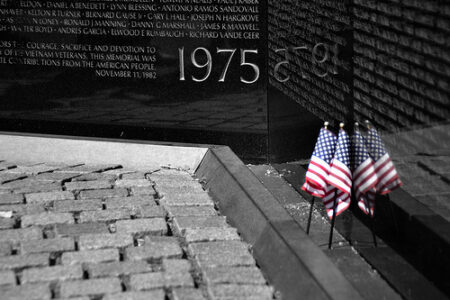
Vietnam Memorial

Image by Photopin

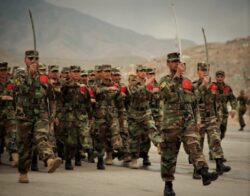
Afghan Army Now Ready … to lose to the Taliban

➪ read the full post HTML

by Charles Knight, Lobe Log, 19 September 2015.

A review of the well-informed and insightful study by M. Chris Mason, The Strategic Lessons Unlearned from Vietnam, Iraq, and Afghanistan: Why the Afghan National Security Forces will not hold, and the implications for the U.S. Army in Afghanistan, Army War College Strategic Studies Institute, June 2015.

The most serious deficit of the Afghan National Security Forces…is its lack of motivation in comparison to the Taliban. One of the primary lessons unlearned from Vietnam, Iraq, and Afghanistan is that soldiers in the armies we create, train, and equip are simply not willing to fight and die for weak, corrupt, illegitimate governments.
~ M. Chris Mason

Is Lockheed Martin too big to fail?

by Leigh Munsil and Austin Wright, Politico, 12 August 2015.
➪ HTML

“I have never known a congressperson who will oppose federal spending that provides many jobs in their district,” said Chares Knight of the Project on Defense Alternatives, a Washington think tank focused on defense reform. “What makes compelling political sense for the individual member of Congress often ends up in distorting federal spending priorities. As Lockheed Martin becomes even more dominant in the defense sector it becomes more likely that defense spending choices will be distorted by the particular business interest of this one giant corporation.”

Carl Conetta on ‘Isolationism’ and US Public

➪ audio CounterSpin, 24 October 2014.
Polls show pretty clearly that the public isn’t enthusiastic about getting involved in more wars. To many elites, this is dangerous isolationism and a retreat from America’s rightful position as a superpower. Carl Conetta of the Project on Defense Alternatives has taken a deep look at public opinion, and CounterSpin talked with him about the problems with elite rhetoric about isolationism.

Despite Public’s War Weariness, U.S. Defence Budget May Rise

by Jim Lobe, Inter Press Service, 15 October 2014.
“…even if the defense budget does indeed increase over the next few years, it should not be taken as a popular mandate for military activism, particularly for protracted military commitments of large numbers of ground troops, given the persistent public disillusionment with the wars in Iraq and Afghanistan.”  ~ Carl Conetta


Something in the Air: ‘Isolationism,’ Defense Spending, and the US Public Mood

by Carl Conetta, Project on Defense Alternatives, Center for International Policy, 14 October 2014.

PDFHTMLPDF executive summary HTML executive summary
 
Something in the Air Is “neo-isolationism” captivating the American public? Or is interventionism back? Will the public continue to support reductions in defense spending?
 
The report offers a comprehensive and critical analysis of current and historical US public opinion polls on global engagement, military intervention, and defense spending. Significant fluctuation in public sentiments is evident. So is an enduring divide between elite opinion and the general public. The report assesses these in light of changes in US policy, strategic conditions, and the economy. It also examines the effect of partisan political dynamics on public debate and opinion. Seven tables and graphs.

The US “Asia Pivot” and “Air-Sea Battle” Concept: Toward Conflict with China?

by Carl Conetta. Originally published as “Will the QDR Pivot for Air-Sea Battle with China?” in Reset Defense Bulletin, 03 March 2014.

➪  HTML   ➪ PDF

Asia Pivot

Will China come to pose a peer military threat to the United States?  The Obama administration’s 2012 Strategic Defense Review and the 2014 Quadrennial Defense Review (QDR) turn on this eventuality. Both the so-called “Asia pivot” and the evolving Air-Sea Battle (ASB) operational concept are meant to preclude it. But they may serve to precipitate it, instead.

US doesn’t need more defense dollars to ease crisis in East China Sea

by Charles Knight, letter to the editor of the Boston Globe, 24 Jan 2014. This post appeared first in PDA’s now archived Defense Strategy Review blog.

Preventing war with China requires diplomatic wisdom, not more US military investment. Nicholas Burns (The trouble with China, Op-ed, Jan. 16) cites a recent mini-crisis in the E.China Sea as a warning sign for “congressional leaders in both parties supporting deep cuts in the State Department and Pentagon budgets.”

However, the modest budget reductions that have been proposed — next year the Pentagon is actually getting a $20 billion raise — would in no way prevent the United States from performing shows of force such as the recent flight of B-52s through China’s newly claimed airspace in the East China Sea. The Pentagon’s budget would have to be cut in half to get close to touching overwhelming US military dominance in the Pacific.

A quick look at a map of the region will reveal that China has critical national interests in unencumbered access to the shipping lanes off its coasts and through the passages to the south. Accommodating these interests is the best path to peace in the long run.

America will be much better served by helping to establish an inclusive cooperative economic and security zone in the region, rather than pursuing an ultimately losing game of indefinitely overmatching China’s military power in its own neighborhood.

~~~~~~~~`

The trouble with China: It’s the responsibility of the US to prevent war over East China Sea islands
by Nicholas Burns, Boston Globe, 16 January 2014.

As the White House struggles to cope with a burning Middle East, another vital challenge is arising on the far horizon — China is flexing its muscles with real consequences for America’s future in Asia.

In the East China Sea, the United States worries about a stand-off between our ally Japan and Beijing over conflicting, historical claims to small, uninhabited islands the Japanese call the Senkakus and the Chinese call the Diaoyu. China opposes Japan’s ownership of the islands and, in November, announced creation of an Air Defense Identification Zone in the East China Sea that directly challenged the right of Japanese, American, and other aircraft to transit airspace in the area without prior notification to Beijing. China has made equally extravagant legal claims in the South China Sea against Filipino and Vietnamese territorial claims.

As my Harvard colleague, Graham Allison, recounts in the National Interest, China’s actions are playing out on a broad historic canvas with Beijing and Washington as the main actors. He reminds us of the “Thucydides Trap”— when, in past centuries, “a rapidly rising power rivals an established ruling power, trouble ensues. In 11 of 15 cases in which this has occurred in the past 500 years, the result was war.”

Conflict between the United States and China is far from inevitable. But the East and South China Seas crises illustrate the American challenge in working with China’s assertive new leadership. The United States and China are partners on a range of issues, from trade to climate change and proliferation. But they are also strategic rivals for power in Asia. That is why the White House should be firm that the United States and its allies won’t be bullied by China’s peremptory and unilateral territorial claims.

The immediate challenge is in the East China Sea. Tokyo defends its long possession of the islands through naval and air patrols while Beijing counters with its own naval vessels and aircraft to contest it. The obvious risk is potential collision by two powerful militaries at sea and in the air. The stakes are very high for the United States as our defense treaty with Japan obligates us to come to its assistance in the event of conflict with China.

The United States has rightly stood by Japan against China’s unilateral claims. Washington is also counseling China to gain better control of the often-willful People’s Liberation Army and submit its territorial claims to international adjudication rather than assert them by fiat and intimidation.

To be fair, however, Washington is also advising Japan’s nationalist Prime Minister, Shinzo Abe, to lower the temperature in his rivalry with China. His recent visit to the Yasukuni Shrine, where war criminals from the Second World War are buried, as well as Japan’s refusal to acknowledge the horrific actions of its military during the Second World War, are unnecessarily provocative to the Chinese, South Korean, and Filipino peoples.

As the United States seeks to keep the peace in the East China Sea, the immediate danger is not so much that Japan or China will decide to launch a war for the islands but that they might stumble into conflict by mistake or miscalculation.

British historian Margaret MacMillan warns of such a risk in a recent Brookings Institution essay. She recounts the improbable and unplanned events that led to the outbreak of war in 1914 in which 16 million combatants and civilians eventually perished. Her essay is a direct warning — we can’t take the current Great Power peace for granted. Human folly, frailty, and hubris could lead the great powers of our time — among them China, Japan, and even the United States — into a conflagration we never believed was possible. “The one-hundredth anniversary of 1914 should make us reflect anew,” she warned, “on our vulnerability to human error, sudden catastrophe, and sheer accident.”

The East China Sea Crisis and the lessons of World War I remind Americans of a final stark reality — global peace and security still depends on us more than any other country. It is thus essential that we remain the world’s strongest diplomatic and military power. Congressional leaders in both parties supporting deep cuts in the State Department and Pentagon budgets should remember that in Asia, the Middle East, and beyond, we are still, as Madeleine Albright once rightly claimed, the world’s “indispensable” nation.

Nicholas Burns is a professor of the practice of diplomacy and international politics at Harvard’s Kennedy School of Government.

US Policy on Syria: War or Diplomacy?

➪ HTML by Carl Conetta, editor, Project on Defense Alternatives Resource Compilation. Updated: 23 September 2013.    A Selection of Critical Views & Proposals:   ● War or diplomacy?   ● Intelligence   ● International Law   ● International & Domestic Support   ● Congressional War Authorization   ● A broader purpose, a wider war?  ● Military Factors  ● Collateral Effects of War  ● Cost Factors & Budget   ● Alternatives to war  ● General Background

Kerry for Keeping Option to Use Ground Forces ‘In the Event Syria Imploded’

➪ HTML by Charles Knight, Huffington Post, 06 September 2013. “A punishment raid is one thing, but using armed force to attempt to prevent proliferation from Syria is very different sort of activity. In the event of a chaotic collapse of the Assad regime and the disintegration of the Syrian military U.S. air-strikes alone will not be able to stop proliferation of the chemical weapons.”

Military Intervention in Syria? — American People Show Greater Wisdom Than Washington

➪ HTML by Charles Knight, Huffington Post, 07 May 2013. Advocates for U.S. military intervention in Syria are presently confounded by wide and deep opposition from the American public to additional military interventions abroad. When strong majorities hold opinions opposing military intervention in Syria there is something other than isolationism going on. Indeed, a majority of Americans are far ahead of Washington in learning the hard lessons of the Iraq and Afghanistan wars.

Three Leadership Steps for Peace in Korea

➪ HTML by Charles Knight, Huffington Post commentary, 15 April 2013.If you want China’s help on restraining the Nort Korean state you must make a credible promise to them that you will withdraw all U.S. forces and leave all bases on the peninsula after the old Stalinist regime collapses — as everyone expects it will sometime in the next twenty years. Otherwise, it is in China’s national interest to keep the North Korean regime limping along … as long as possible.”

Time to Reset Defense: Guidance for a More Effective and Affordable US Defense Posture

(video: presentations and discussion) (brief summary) a leadership conference sponsored by the Project on Defense Alternatives, held at the Carnegie Endowment for International Peace, 26 March 2013. Panel 1: Dr. Gordon Adams, Stimson Center; Carl Conetta, Project on Defense Alternatives; Dr. Gregory Foster, National Defense University; Amy Belasco, Congressional Research Service, discussion interlocutor. Panel 2: Benjamin Friedman, Cato Institute; Melvin Goodman, Center for International Policy; Col. Douglas Macgregor (ret.), Burke-Macgregor Group; Sandra Erwin, National Defense Industrial Association, discussion interlocutor.

Hagel: Pentagon Prepared to Make ‘Big Choices’ to Reduce Spending

by Sandra I. Erwin, National Defense Magazine, 03 April 2013. HTML

“Current military budgets do not distinguish between ‘needs and wants,’ Benjamin Friedman, a national security analyst at the Cato Institute said at a recent conference hosted by the Project on Defense Alternatives. A reexamination of the military structure has been long overdue, said retired Army Col. Douglas Macgregor. During World War II, he said, the U.S. military had eight four-star generals and admirals leading a force of more than 15 million personnel. Today, there are 38 four-stars leading an active-duty force of 1.4 million. What is needed today, he said, is not only to cut spending but also to develop a coherent national security strategy, which has not been done since 1989. Gordon Adams, a professor of national security at American University and a former budget official during the Clinton administration, has blasted the Pentagon for living in denial about the coming defense drawdown.”

Funding the military of the future

➪ HTML by Amber Corrin, FCW, 26 March 2013. “Conetta said that reasonable alternatives to today’s military could be based on a different approach – one that helps sustain the economy and receives no more than 2.2 percent of the nation’s gross domestic product; emphasizes defense over global environment-shaping; and focuses on multi-lateral cooperation.”

Obama Getting Ready to Reduce Nukes: A Step in the Right Direction

➪ HTML by Charles Knight, Huffington Post, 28 February 2013. As the deployed force gets smaller it makes sense to reduce the complexity of the force structure. There is nothing magic about the triad created at the height of the Cold War. PDA has argued for moving to a dyad made up of submarines and land-based ICBMs. Ending the strategic nuclear role of bombers would reduce the requirement for (and the cost of) the new bomber currently in development and also allow the remaining bomber fleet to more effectively focus on a conventional role.

Striking a New Deal for Defense

➪ HTML by Carl Conetta and Charles Knight, Government Executive, 13 February 2013. Whether or not the sequester goes into effect — or lasts only a couple of months — the Pentagon’s budget is surely coming down another notch or two. That’s simply the reality of the current economic and strategic circumstance. It’s time for defense leaders to plan accordingly. The surest way to make smaller Pentagon budgets work is to cut end strength and structure — fewer troops, brigades, ships and aircraft. In the near term this might be managed by reducing the number of soldiers and the size of units routinely stationed or rotated abroad.

President Obama Must Prepare for the Sequester Squeeze Play

➪ HTML by Charles Knight, Huffington Post, 01 February 2013. The squeeze play that is now underway will force a disruptive and self-limiting drawdown at the Pentagon that plays nicely to the “hollowing” narrative of hawks like McCain. It will be easy to use the “dire circumstances” at the Pentagon to make President Obama appear to be an ineffective and irresponsible Commander in Chief. To avoid this Obama must move now to set forth the vision and reasoning for a decisive drawdown which will sustain a top notch military with a lighter and smaller global footprint. That is the best strategy for America… and the best play for the White House.