Aslı Ü. Bâli on Why the War on Iran Accelerates the Decline of U.S. Global Primacy

I am a subscriber to Peter Beinart’s Notebook. I find him a generous and engaging interviewer of his very well-informed and insightful guests. This morning, March 7th, I decided to listen to the interview that I feature in this post.

As I listened to Aslı Ü. Bâli’s initial remarks, I was immediately astounded by the clarity of her analysis and depth of her knowledge.

To the point: I urge you to watch and listen to this interview. I am no fan of the superlatives so common in this Trumpian age. That said, I assert that this interview is a “must-watch” for anyone seeking to understand this extraordinary moment of geostrategic violence.

Bio: Aslı Ü. Bâli is Professor of Law at Yale Law School. Bâli’s teaching and research interests include public international law — particularly human rights law and the law of the international security order — and comparative constitutional law, with a focus on the Middle East.

https://vulnerableadvocate.substack.com/p/asl-u-bali-on-why-the-war-on-iran


The Future of the Tank

by Lutz Unterseher, PDA Guest Publication, February 2026


Threatened Species

Many dogs are the death of the hare.

At present, it seems that the means to combat main battle tanks (here simply called “tanks”) and their armored escorts are accumulating. In the media, people speculate about the “end of the tank”. Indeed, Modern anti-tank warfare offers very impressive capabilities. In the following, a rough sketch and an overview are attempted. In doing so, the combat of tanks by other tanks with sub-caliber kinetic-energy ammunition fired from high-performance cannons is left out. The focus lies on other combat elements that make life difficult for the object of our interest.

Tube artillery was already, with “dumb” ammunition lacking special armor-piercing effect, a considerable threat to tanks – particularly when they got into tactical situations in which they had to operate under dense, indirect fire. Apart from accidental direct hits, even a dense shower of fragments could immobilize the fighting vehicles – with effect, for example, against the running gear or sights. But artillery has experienced a revolutionary change: from combat support to a combat element.

This was brought about by three innovations (Kühr 2004):

  • Range increase, at first almost by twice, then by more than three times (base-bleed technology and rocket-assisted propulsion), which, through overlapping radii of effect of batteries deployed apart from one another, allows considerable concentrations of fire and generally increases control of space.
  • The development of armor-piercing, “intelligent” (that is, target-seeking) munitions, whose effect is mostly directed against the top side of the vehicles (top attack), which is difficult to protect and
  • Close linkage with one’s own reconnaissance means (battlefield radar, drones), as well as networking with other data sources that provide target information, which is processed digitally, almost in real time, and forwarded to the batteries.

Rocket artillery has undergone a similar emancipation process to tube artillery: here, too, an enormous range increase and the use of intelligent munitions (top attack). However, the radius of fire cannot be varied as flexibly as with tube systems, and the available projectile types remain limited. One advantage, however, (there is now a ban under international law), was that salvos of submunitions (bomblets and minelets) could be fired with considerable effect against concentrations of armored vehicles.

Top attack: Sufficient protection by “passive” layered armor would be too heavy, and reactive armor of acceptable weight would be overwhelmed if the incoming warhead (shaped charge or projectile-forming) had a larger caliber or, for example, a tandem configuration. An active projectile defense, finally, is not only costly and, because of considerable complexity, prone to malfunctions, but can also be saturated by multiple threats.

Infantry (armored infantry – riflemen – parachute – mountain troops) acts against tanks above all with shoulder-fired weapons (shaped-charge warheads, ballistic trajectory) as well as guided missiles on a direct line of sight: with shaped charges and semi-automatic guidance as well as in fire-and-forget mode by means of thermal-imaging sensor technology. Despite considerable progress in protection technology, such systems, even when they attack heavy tank vehicles horizontally (flanks and rear), still have notable chances of effect.  Above all, when modern warhead technology is used, which – as noted – can mean caliber increases and/or tandem solutions. The trend is toward integrating a capability for top attack as well. One example: the U.S. system Javelin (Headquarters Department 2003).

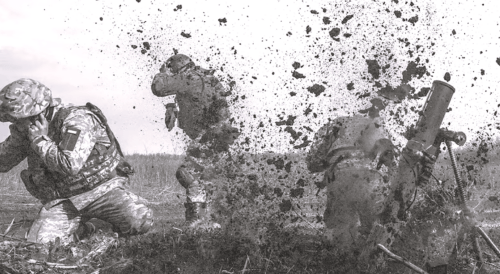
As further means of infantry against armored vehicles, tactical drones have come into focus during the war in Ukraine. Particular efficiency is promised by fiber-optic-guided equipment (in top-attack mode) with ranges around 25 km. This solution is not dependent on artificial intelligence (e.g., automatic image recognition). The human actor remains part of the control loop, and data transmission, unlike radio waves, is resistant to jamming. Already more than 35 years ago, corresponding systems (however, with more elaborate missile technology) were proposed for broad use after successful practical tests (Unterseher 1989: 52 et seq.), but without substantial resonance.

Combat engineers deal with tanks and their accompanying forces primarily by employing mines. Here, too, there has been a revolution. Mines are no longer triggered solely by the pressure exerted by the tracks or wheels of armored vehicles, but by a wide variety of sensors that respond to seismic, acoustic, or magnetic signatures. In this way, the effect can be directed against the entire underside of the respective vehicle. Sensor-triggered directional mines (“automated Bazookas”) have also existed for several decades. These aim above all at the flanks of the vehicles to be fought.

Tactical air forces, particularly those for close air support, are also well equipped to combat tanks. Guided weapons with automatic image recognition and top-attack mode play a central role here.

Finally, air and land forces use light to medium machine cannons with kinetic-energy ammunition against tanks: the former primarily against the top of the vehicles, the latter mostly against the flanks and rear.

If, then, the end of the tank is being forecast, that eventuality appears plausible. Yet this – the demise of the tank as an autonomous agent on the battlefield – has been prophesied before, yet lived on.

Are many dogs really the death of the hare?
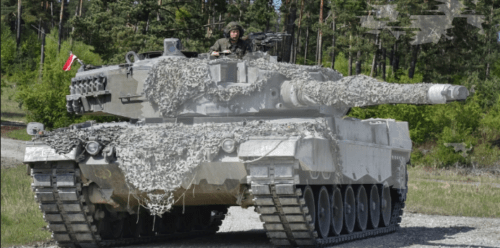
 

German-made Leopard Tank flagged to Spain

A Historical Excursus

The Beginnings

When Leonardo da Vinci conceived the archetype of a tank, he lacked a primo motore: a power machine that could replace human or animal muscles as propulsion. Only around 1900 did this propulsion take the form of the internal-combustion engine: compact enough to be used in a not-too-clumsy armored vehicle that drove on tracks, which had just appeared, especially on tractors in agriculture (to enable cross-country mobility with low ground pressure).

Quite a number of inventors in different countries arrived at corresponding solutions. Outstanding was the design of a “motor gun” by the Austrian railway officer Gunther Burstyn, which he proposed to his War Ministry in 1911, only to be promptly rejected (Mainig 2009). Features of the vehicle: driver in front, rotating turret with rapid-fire cannon in the middle, and engine in the rear.

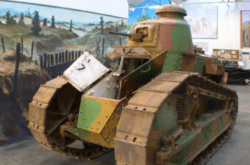
New attempts occurred in England and soon thereafter in France. The aim was to bring the war back into motion after it had frozen into trench warfare on the German Western Front in autumn 1914, and to do so through the use of cross-country-capable, protected, and armed vehicles. The first British vehicles, 50 in all, appeared on the Somme in mid-1916. They weighed almost 30 tons, had no rotating turret, and their armament was in casemates protruding from the flanks. A light French model (Renault M 17-18 F.T.), which was mass-produced to supplement the heavy tanks, then had the configuration of the Burstyn original (Heigl 1935: 281 et seq.).
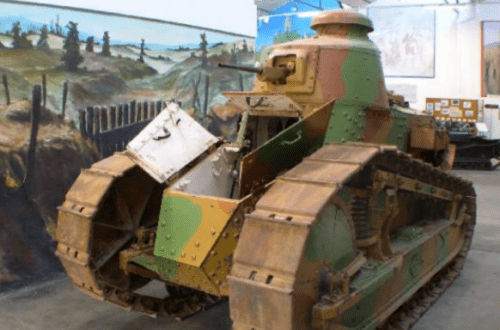
Renault M FT-17 tank

The German Army could show no more than 20 tanks – for, to bring the war back into motion, it relied on poison gas, flexible artillery fire, and a new, fluid infantry tactic: storm troops (Messenger 1978: 9 et seq.).

France and England used their tanks in growing numbers, integrated into traditional frontal infantry attacks. With this, the German lines could not be pierced deeply, yet the defender paid a high price for his efforts and was pushed back step by step.

Overall, the two Western Allies produced about 5,500 tanks by the end of the war. If the war had continued, large-scale tank attacks, freed from integration into infantry operations, would have had their premiere. The “Plan 1919,” conceived by Colonel J. F. C. Fuller, the spiritus rector of the young British tank force, envisaged the use of about 5,000 tanks: for the breakthrough, the thrust into depth, and the pursuit of scattered enemy troop elements (Heigl 1938: 248 et seq.).


Between the Wars

After 1918, it initially seemed that the idea of an independently operating tank force would be pursued further in England and put into practice. Thus, for example, combat exercises were conducted with mechanized contingents (consisting of tanks, motorized infantry, and artillery on self-propelled mounts) on the Salisbury Plains training area to demonstrate the concept’s feasibility (Liddell Hart 1965: 99 et seq., 105 et seq.).

But the representatives of infantry and cavalry were not convinced and defended their claim to scarce armament resources. A central argument was that the tank had already reached the zenith of its career because, after the improvisations of the Great War, an effective anti-tank defense had emerged. What was meant above all were the specialized, light anti-tank guns that were produced in large numbers. Some even spoke of the tank’s end. As a result, a compromise emerged: the motorization of the entire force, the integration of light armored vehicles into the cavalry, and the delayed establishment of only one armored division (which was later split into two).

When the Wehrmacht in May 1940 advanced its tanks toward the Channel coast, the 1st Armored Division, which was to be the backbone of the British Expeditionary Force on the continent, was still training in England (Messenger 1978: 191). In France, too, only one tank division was fully operational (commander: Charles de Gaulle). Two others had only just been established. Germany, however, possessed ten. In France, whose army had more tanks than the Wehrmacht, the bulk of these vehicles had been distributed to the infantry divisions for support purposes (ibid. 190).

The German lead, even though the Wehrmacht’s infantry divisions still formed the clear majority of its forces, was due above all to General Heinz Guderian, the pioneer of the tank force (Guderian 1992/1937).  In meticulous studies he had drawn lessons from the use of tanks in the First World War and – inspired also by the Austrian General Ludwig von Eimannsberger – had arrived at pioneering conclusions: independent use of this new weapon as much as possible in concentrated form, accompaniment by motorized infantry and artillery under armor protection, cover and support from the air, deep operations against the enemy infrastructure – bypassing local resistance.


The Second World War

The German approach was adopted in the Second World War, with variants, by all sides, including the Red Army, which, while leaving its accompanying infantry unprotected at high cost in blood, learned from the opponent in other respects. (In the 1930s, the Soviets had built up a mighty tank fleet, but because of Stalin’s Great Purge, it suffered from weakness in conception and leadership.)

During the Second World War, however, operational approaches were also developed that enabled even the most massive armored thrusts to be met with effective defenses. Examples:

In the summer of 1942, the tanks of the German Afrika Korps failed at Alam Halfa against the British defense because they got stuck in a deeply echeloned, chessboard-like system of field fortifications with infantry plus artillery and could thus be successfully caught by enemy tank forces in the flank: prerequisite for the defeat at El Alamein (Dorman-Smith 1962).

In the summer of 1943, the heavy forces of the Wehrmacht in the Kursk salient had their backbone broken – the beginning of the end. Their pincer movement got stuck in the forward zone of a more than 100 km-deep area defense, which relied on infantry well equipped with anti-tank means and artillery.  In the event of local crises for the defensive array, tank reserves were kept ready to intervene, augmented by the preparatory work of the defensive forces (Schukow 1969: 442 et seq.).

Critics note that, in intercepting the southern thrust of the Wehrmacht offensive, the Red Army’s intervention reserve partially failed, and coordination with local forces was insufficient. This, however, was not a system error but due to the inability of the Soviet leadership on site.


Cold War

Despite the real possibility of coping with “tanking” by means of “asymmetric” structures, tank-heavy structures nevertheless became the essential feature of the land forces in the Cold War: tank as well as armored infantry divisions on one side and tank as well as tank-strong motorized rifle divisions on the other stood facing one another – structurally quite similar.

Colonel (ret.) Bogislaw von Bonin, head of the subdepartment “Operational Planning” in the Amt Blank, the nucleus of the Bonn Federal Ministry of Defense, was ostracized and kicked out. Why? His conception for the new West German armed forces was asymmetric: deeply echeloned infantry, tightly measured armored intervention reserves, concentration on defense, and, given the danger of the use of nuclear weapons, no provocation of the other side by the offensive potential of an army shaped by tank forces (Bonin 1989).

Technology was on von Bonin’s side. After the Second World War, light weapons with shaped-charge warheads emerged, from improved “Panzerfäuste” – “Bazookas ” to anti-tank guided missiles, which gave infantry forces a “bite” that the armor of that time was not able to withstand and which, if used en masse in light formations, could have driven tank forces to the brink of obsolescence. Only from the mid-1970s did armor protection begin to catch up (using composite, layered, reactive, active armor).

It is noteworthy that there were conflicts on the periphery that supported von Bonin’s assumption – namely that light forces would be able to neutralize the advances of tank-strong mechanized formations. Examples: China’s “punitive expedition” against Vietnam at the beginning of 1979, which with its strong mechanized forces got stuck with high losses in the improvised defense of “construction troops” fighting in guerrilla fashion (Jencks 1979); the 1980 invasion of Iran carried by similarly heavy, armored troops of Saddam Hussein, which was stopped by light, mobile forces (Revolutionary Guards of the Mullah regime) (Razoux 2015); the victory of the desert warriors of Chad, equipped with civilian off-road vehicles and anti-tank guided missiles, over the invading armored troops of Libya 1986/87 (Neville 2018).

The Western military, however, remained undeterred. Although it saw itself as the defender, it lacked an alternative to tank-heavy forces. It was customary to compare the numbers of divisions and tanks to bolster the claim of a conventional superiority over the other side. Since the Eastern bloc had more divisions and tanks than the Western bloc, the equalization of combat power by tactical nuclear weapons was easily promoted by NATO nations.  This rationalizing formula was used to justify the USA’s political dominance in Central and Western Europe.  In the 1980s, this justification for employing nuclear weapons to ‘balance’ against the East was subjected to systematic criticism and falsified by various analysts who took qualitative variables into account (Epstein 1988, Chalmers/Unterseher 1988).

The specter of a tank avalanche from the East lost further credibility when Mikhail Sergeyevich Gorbachev, in 1988, initiated a comprehensive structural reform of the Warsaw Pact’s armed forces stationed in Central Europe (Gorbachev 1988). This strengthened defense (more artillery, engineer equipment, and anti-tank weapons) and rendered thousands of tanks superfluous – no longer required for the protection of one’s own territory. That was the decisive prerequisite for the success of the 1990 Vienna arms-reduction talks (CFE).


The Time Thereafter

With the end of the bloc confrontation, the era of “interventionism” began. Alliances of states of the First World endeavored, in the alleged chaos of the Third, to create order by military means, for humanitarian, but above all, also geostrategic and economic motives. Tanks were marginalized in this business.

What counted was the operational and strategic mobility of lighter, protected vehicles. The appearance of tank-strong mechanized forces in the war against Iraq (2003) should not deceive: it had, for lack of an opponent to be taken seriously, rather a symbolic character. Now, the time of the great military interventions seems to be over, for these were, all in all, a political disaster.

Once again a renaissance of the old East – West confrontation is developing: with the war in Ukraine at the focal point. There is the impression that tank forces have also, in this context, lost importance. Tanks support the infantry or conduct attack actions at the lower tactical level. Under ubiquitous threat from tactical drones, however, there is little room for maneuver. The dynamics of events are determined rather by light, fluid troops that act in coordination with the fire of precise artillery (DER SPIEGEL 2022: 85 et seq).


Mechanized Warfare: A Casuistry

  1. a) Party A has broken through the border security of D with strong mechanized forces and strives rapidly, with tank formations in front, into the depth of D. This party throws against the invader similarly structured armored troops. It comes to an encounter engagement (or an encounter battle). From this, a melee can develop, a dissolution of the formations into duels. Then it depends above all on qualitative variables: the professionalism of the crews and the capability of their combat platforms. Yet it remains a gamble. During the battle in the Kursk salient, in the southern sector (near Prokhorovka), such a confrontation occurred (Töppel 2017). The German Bundeswehr during the Cold War saw opportunities for success with corresponding tactics against an opponent perceived as numerically superior.
  2. b) Party D seeks no collision with the mechanized forces of A. Instead, an attempt is made to slow the opponent’s advance or temporarily stop it. For this, forces (armored infantry, combat engineers, and, if available, tank destroyers) are detached from one’s own potential and assigned to create echeloned defensive positions. If one succeeds in binding the invader in this way, the bulk of the armored forces is set for an energetic blow into the flank (or the back) of the opponent. The British tank expert Richard Simpkin saw in such an approach, which he called “hammer and anvil”, an essential recipe typical of German tank combat in the Second World War (Simpkin 1986).
  3. c) Party D opts for an alternative to hammer and anvil that consists of tank forces forming a flexible phalanx: one alternates, in principle holding a line, between covered, camouflaged positions and in doing so uses the advantage of crossing the T in order to strike the attacking forces (A). This pattern can be recognized in the fight of the one-and-a-half Israeli tank brigades that, during the October War of 1973, on the Golan Heights held out for four days against two mechanized divisions (with almost 600 tanks) of the Syrian army, until reserves arrived (Konzelmann 1974).
  4. d) The British military theorist Basil Henry Liddell Hart thought nothing of exposing tank forces to the risk of encounter engagements (according to him, these were too precious for that). While in most modern armies the conviction holds that tanks are the best means against tanks, he pleaded for raids striking into the depth of the opponent’s area, whereby the path of least resistance should be sought (Liddell Hart 1962: 347 et seq.). The operation “sickle cut” of the Wehrmacht during the campaign in France in May 1940, that is, the thrust to the Channel, corresponded roughly to this approach. The aim of such deep operations should be to take strategically important positions. The defender (D) would then have to attack these, whereby the attacker (A) would have the inherent advantage of the defense. In doing so, he could, for example, apply the methods of b) or c).

Discussion: In the following, it is assumed that Party D partially or fully protects its area using net-like structures (approaches exist in Ukraine). The – protected and camouflaged – nodes of such a net could be formed by precise tube artillery and teams with tactical drones (along with the corresponding reconnaissance means). Because of the wide range of fire assets, the defensive net can be relatively wide-meshed, helping spare scarce military resources. And since this defensive system may be regarded as a force multiplier for counterattack forces operating within its framework, these can be kept rather modest in total scope and unit size.

a1) In view of area surveillance by precise fire, a rapid advance of strong mechanized forces (A) is hardly realizable. If such a thrust, with losses in combat power, nevertheless succeeded, heavy elements (D) entering an encounter engagement would have clear advantages because of support by the defensive net. However, these, while exposing themselves, would offer the invader’s long-range anti-tank assets worthwhile targets.

b1) If it is about repelling a massive attack by means of the hammer-and-anvil method, it likewise holds that the forces used for this (D) enjoy advantages through the defensive control of space. These are, however, to be seen rather on the side of the anvil elements, which – adapted to the terrain – hardly expose themselves, than with the tank-dominated troops that carry out the flanking thrust and thereby are vulnerable to the effect of the longer-range anti-tank means of the attacker (A).

c1) The flexible phalanx of tanks (D), which fights alternately from covered positions (actually, tank destroyers would suffice for their task), likewise benefits from the area-controlling defense – however, only if one has already established oneself on the spot. The allocation is problematic: how do the heavy defensive forces get into their positions without being caught by A’s long-range weapons?

d1) Finally, the raid into depth (A), which is supposed to seek the path of least resistance, becomes more and more unrealistic with increasing coverage of the area by defensive fire.


Way Out: Possible Substitution

It is evident that heavy armored forces that go into independent battle in larger formations have, today, in view of new defense technologies, lost effectiveness and survivability. Are we thus at the beginning of an era in which the movement of troops will be replaced – largely – by that of fire?  Hardly.  Structures and modes of operation can be recognized that will continue to enable dynamic combat actions, both for the attacker and the defender, in counterattack.

Reference was already made to a corresponding development in the war in Ukraine: in principle, it is about tactical cooperation between precise, flexible tube artillery (mechanized, operating from covered positions) and light, fluid infantry.

In the ideal case, this infantry could be constituted as follows: it is highly mobile and operates in loose swarms, rides on motorcycles and quads, and uses light, armored wheeled platforms as supporting weapon carriers (10 – 12 t, 4×4 or 6×6, top surface one third of that of modern tanks). These wheeled vehicles, compared to heavy tanks, offer greater strategic and operational mobility, making them particularly suitable for out-of-area missions. Their tactical agility/compactness may be regarded as a functional equivalent of stronger armor protection.

Even if an attacker can partially bypass the weapons effect of the defender, the latter nevertheless retains typical advantages of defense (as long as he fights on his own territory): better information from the area-covering reconnaissance system, air (drone) defense integrated into the system, network of indirect fire (artillery – tactical drones) and shorter routes for logistical support as well as the backing by possible home-defense structures (Homeguard).

The cooperation of powerful artillery and light infantry provokes a reminiscence. The German spring offensive (“Michael”), France 1918, saw storm troops, within a few days, achieve enormous penetration depths into a solid system of trenches and defensive fire, making use of an artillery innovation developed by Colonel Georg Bruchmüller/Breakmueller (nom de guerre).  He had created the prerequisite for this outcome by structuring flexible concentration of fires. Soon, however, the offensive slackened because the artillery of the time and the reserves were unable to keep pace with the advance (Stedtmann 2001). This may look different under modern conditions.

What did Rabbi Ben Akiba say in the stage play “Uriel Acosta” of the Prussian poet Karl Gutzkow? “Everything has happened before.

~~

Bibliography

Bonin, B. von 1969: “Juli Studie” (1954), in H. Brill (ed.), Bogislaw von Bonin im Spannungsfeld von Wiederbewaffnung – Westintegration – Wiedervereinigung, Vol. 2, Documents and Materials, Baden-Baden: Nomos.

Chalmers, M./Unterseher, L. 1988: “Is there a Tank Gap? Comparing NATO and Warsaw Pact Tank Fleets,” International Security (IS), Vol. 13, No. 1, pp. 5–49.

DER SPIEGEL 2022: “Der Gegenschlag,” No. 38.

Dorman-Smith, E. 1962: “The Strategy of Indirect Approach in the North African Campaign 1940 – 1942,” in B. H. Liddell Hart, Strategy, loc. cit.

Epstein, J. M. 1988: “Dynamic Analysis and the Conventional Balance in Europe,” IS, Vol. 12, No. 4, pp. 154 – 165.

Gorbachev, M. S. 1988: Address to the 43rd Session of the U.N. General Assembly, TASS Press Release, 7 December.

Guderian, H. 1992/1937: Achtung – Panzer! The Development of Armoured Forces, their Tactics and Operational Potential, London: Arms &Armour.

Headquarters Department of the Army 2003: Javelin, Medium Anti-Armor Weapon System – FM 3-22.37, Washington, D. C., 23 January.

Heigl, F. (ed.) 1935: Taschenbuch der Tanks, Part I, Munich: Lehmann.

— 1938: Taschenbuch der Tanks, Part III, loc. cit.

Jencks, H. W. 1979: “China’s ‘Punitive’ War on Vietnam: A Military Assessment,” Asian Survey, Vol. 19, No. 8, pp. 801-815.

Konzelmann, G. 1974: Die Schlacht  um Israel. Der Krieg der Heiligen Tage, Munich: Desch.

Kühr, M. 2004: “Artillery” in J. Gerber/M. Kühr (eds.), Landkriegführung, Bissendorf: Biblio, pp. 1-14.

Liddell Hart, B. H. 1962: Strategy, New York, N. Y.: Praeger.

— 1965: Memoirs, London: Cassell.

Mainig, H. W. 2009: “Der erste Kampfpanzer der Welt. Günther Burstyn und sein ‘Motorgeschütz’”,  in Truppendienst, No. 3.

Messenger, C. 1978: Blitzkrieg. Eine Strategie macht Karriere, Bergisch-Gladbach: Lübbe.

Neville, L. 2018: Technicals. Non-Standard Vehicles from the Great Toyota War to modern Special Forces, Oxford: New Vanguard.

Razoux, P. 2015: The Iran-Iraq War, Cambridge, MA – London: Harvard U. P.

Schukow, G. K. 1969: Erinnerungen und Gedanken, Stuttgart: Deutsche Verlagsanstalt.

Simpkin, R. E. 1986: Race to the Swift. Thoughts on 21st Century Warfare, London: Brassey’s.

Stedtmann, M. 2001: The German Spring Offensive 1918, London: Cooper.

Töppel, R. 2017: Kursk 1943. Die größte Schlacht des Zweiten Weltkrieges, Paderborn: Schöningh.

Unterseher, L. 1989: The Conventional Land Defence in Central Europe: Force Structure, Emerging Technology and Military Stability, Mosbach: AFES-PRESS.

~~

A PDF version is available at: https://comw.org/pda/fulltext/2602 Unterseher_The_Future_of_the_Tank.pdf




The Future of the Tank

By Lutz Unterseher, guest publication, February 2026.  ➪ see full-text: HTMLPDF

Renault M FT_17 tank (circa 1937)

 
In this paper, Unterseher surveys the evolution of anti-tank warfare—from artillery, mines, infantry weapons, and guided missiles to drones, precision munitions, and networked reconnaissance—and shows how modern defenses increasingly exploit top attack, long range, and coordinated fire. It then traces the tank’s history from World War I through the Cold War, emphasizing how armored forces repeatedly adapted to countermeasures and doctrinal change. The author concludes that large independent tank formations are less survivable today, especially under ubiquitous drone surveillance and precision fires, but tanks still matter when integrated into an overall defensive structure. The likely future is a battlefield with greater emphasis on networked defenses employing agile engineering, lighter forces, precise artillery, drones, and fewer tanks as time goes by.

Variables of War

By Lutz Unterseher, guest publication, 01 January 2026.  ➪ see full-text:  PDF

This essay argues that wars do not result from immutable human nature but from political motives, cultural dispositions, and calculations of military opportunity.  Wars are, therefore, preventable. The essay presents a succinct causal model of war’s outbreak.

The formal causal argument:

  • War’s outbreak is treated as the dependent variable; the independent variable is a mix of expansionist or preventive motives and a supportive war culture that glorifies offensive action and soldierly virtues (the “cult of the offensive”).

  • Because such motives and cultures often do not lead to war, a further “sufficient condition” is posited: leaders must judge that a rapid victory is feasible, casualties acceptable, and domestic opposition manageable, typically by identifying structural vulnerabilities or “open flanks” in the opponent’s posture.

  • This feasibility variable is an intermediate link between motives/culture and war and is filtered through perceptions often distorted by ideology, institutional dysfunction, or poor intelligence.

Empirical illustrations of opportunity and miscalculation:

  • Drawing on John Mearsheimer’s study of deterrence failure, the text notes that conventional deterrence often fails when states concentrate on offensive or counteroffensive preparations and neglect robust territorial defense, thereby offering exploitable weak points.

  • The German offensive through the Ardennes in 1940 exemplifies this: France’s incomplete Maginot Line and the misdeployment of its most modern forces created an open flank that German armored units exploited, enabling a rapid breakthrough.

Policy lesson: defense posture and gendered perceptions:

  • The author’s policy inference is that states should avoid inviting attack by concentrating forces for offensives and instead establish “defensive control of space”: dispersed, resilient, terrain‑using dispositions that leave no open flanks and sap an intruder’s speed and momentum, an idea linked to Confidence‑Building Defense concepts.

  • Such structurally deterrent postures may be undervalued because of the gendered coding of offense as active and initiative‑rich masculinity, versus the coding of defense as inactive and passive femininity, leading offensive‑minded and sexist elites to discount the real capacity of defensive systems to frustrate attacks.

European Defense: First the Horror Vacui, Then What?


European national security institutions continue churning through the stages of shock following Trump’s betrayal, dealing with the sudden loss of the familiar and relatively comfortable continuity over the last seventy-plus years of US leadership and dominant position within NATO.  Former President Joe Biden has just now (May 2025) spoken out against the undoing of his NATO revival efforts.


Below is a recent commentary by German military analyst Lutz Unterseher, followed by a short list of recent articles and interviews that preview the likely changes to European national security policy. Only one thing is sure: there will be many changes.

 
European Defense: First the Horror Vacui, Then What?
by Lutz Unterseher, guest correspondent from Berlin, 6 May 2025, initially published at Un-Diplomatic11 April 2025.
 
President Trump has opened Europe’s eyes, but not in the manner I might have hoped: American protection against the “new threat” from Russia is now conditional on arbitrary demands from Washington, such as devoting 5 percent of GDP to defense, and even then it’s not a reliable guarantee.
 

Trump has pulled the rug from under NATO’s reason for existing. For most of the alliance’s history, Europeans were more than willing to believe in a US security guarantee in the semblance of “extended deterrence”—the somewhat ambiguous appendage of America’s strategic nuclear forces to European defenses. All the while, though, analysts in Washington were exploring concepts for employing “tactical” nuclear weapons in a way they hoped would confine an actual nuclear war to European soil. This history of American thinking about—and investments made in—the ultimate weapon undermined the story of America as Europe’s protector.

If Europe opened its eyes to history, it would realize the United States had not made Europe secure all these years; the myth of American protection via NATO was a fiction of convenience for European politicians to avoid thinking too hard about that which might provide genuine continental security.

But with Trump exposing the lie of American reliability, the child has fallen into the well: Europeans now feel exposed—naked, one might say—in a space that seems empty and unprotected: horror vacui.

In a frantic search for a military shield, the Europeans scramble to meet a portion of Trump’s military spending target. Officials talk about raising spending to between 2.5 and 3.5 percent of GDP. For several of Europe’s more developed countries, that level, still well short of Trump’s demand, would seriously undermine the welfare state, just at a time when democracy is under strain everywhere.

Large increases in military spending will further postpone many already overdue investments in national infrastructure across Europe. As a result, Europe’s economy will slip behind the United States and other major economic blocs, accelerating a world of competitive economic nationalisms.

Such a thrust aligns perfectly with Donald Trump’s vision—one he can realize more effectively by pushing Europe’s defense spending higher than by resorting to harmful trade tariffs, though he’s doing both.

There should be no doubt that Russia poses a threat to Europe. Yet, it is worth noting a few basic facts, not to downplay matters, but to maintain clarity:

-Ukraine, despite its relative weakness, has stood up to Russia’s superior force for more than three years, even though Western arms support often arrived too late and frequently did not match the country’s needs.

-In 2024, European Union countries spent €326 billion on defense. In contrast, Russia, including its internal security outlays, spent about half of that. The EU nations also do not have significantly fewer military personnel overall.

-Importantly, Russia cannot project its entire military against Europe—security requirements in the Far East and Central Asia tie down a considerable portion of Russia’s military.

Considering these facts, a dramatic arms buildup in Europe is hard to justify. Under current tensions, the priority should be to set aside nationalisms, pool resources, and form a truly integrated European army, working within EU institutions, ideally “borrowing” NATO’s existing infrastructure.

This joint force should be dedicated to strategic defense, protecting the home territory. Expensive, high-end tools for long-range power projection will be superfluous. US capabilities in NATO do not need one-for-one substitutions. Nonetheless, at the operational-tactical level, a European defense force should retain a force structure and force posture capable of flexibly supporting neighbors under threat. But that requires a disciplined strategy and budget, not arms-racing with Russia or panic-spending to compensate for an extortionist America.

What about responding to nuclear threats? Since the American deterrent is not guaranteed to be available to Europe, attention turns to France. Its nuclear “minimum deterrent” is sufficient for stability, serving as an ultimate insurance policy, not as a provocative means of nuclear warfighting. Paris has already signaled that it might be willing to “Europeanize” its strategic capability. That is good enough for our period of transition.

~~

Lutz Unterseher is a sociologist and political scientist. As director of the Study Group on Alternative Security Policy (SAS) since 1980, he originated the concept of Confidence-Building Defence. Working in international relations and military theory, he has detailed defense strategies and force postures in consultations with political parties, governments, and armed forces. His recent publications on European defense include Ukraine: Options for a Confidence-Building Defense and “European Army”: A Thought Experiment.


Selected sources on European officials’ reactions to the shock of Trump/Vance/Hegseth undermining NATO and the commitment of support for the defense of Ukraine:

“European Group of Five (E5) Defence Ministers’ meeting in Paris (12 March 2025) – Joint Statement,” UK Ministry of Defence, 13 March 2025. https://www.gov.uk/government/publications/european-group-of-five-e5-defence-ministers-meeting-in-paris-12-march-2025-joint-statement/european-group-of-five-e5-defence-ministers-meeting-in-paris-12-march-2025-joint-statement

“EU-UK defense deal in sight at May summit,” by Jon StonePolitico, 14 April 2025. https://www.politico.eu/article/eu-uk-defense-deal-in-sight-at-may-summit/

“Merz and Macron can restart Europe’s Franco–German engine,” Sébastien MaillardChatham House, 1 May 2025. https://www.chathamhouse.org/2025/05/merz-and-macron-can-restart-europes-franco-german-engine

John Mearsheimer responds on the Judging Freedom Podcast (1 May 2025) (minutes 9 to 13) to a clip of former Deputy Supreme Allied Commander Europe General Richard Shirreff (Ret.) addressing the future of European securityvery worthwhile four minutes.

“Distrust of America Reshapes European Defense Strategy”, by Kurt Davis Jr., Las Vegas Sun, 4 May 2025. https://lasvegassun.com/news/2025/may/04/distrust-of-america-reshapes-european-defense-stra/

“European Army”: A Thought Experiment

➪ see full post: PDF

by Lutz Unterseher, PDA Guest Publication (English translation), February 2025.

In nine concise pages, German military analyst Lutz Unterseher provides the strategic orientation, operational modalities, force allocations, institutional framework, overall personnel requirements for active duty and reserves, command organization, and armament composition of an integrated European Union armed force.  He then provides a budget for the component parts.  The total annual cost is 170 billion, 1% of EU nations’ GDP.

Unterseher concludes:

It is hardly accidental that the European Union was chosen as the political framework for this force model. Above all, that is because, given Trump-era U.S. policy, NATO in its Atlantic-partnership sense no longer exists. 

Whether a self-confident “Euro-NATO” can emerge under American pressure and attempts to sow division remains highly questionable. It does, however, seem wise to “carry over” NATO’s infrastructure and communication networks into the authentically European armed forces wherever possible.

see also: European Armed Forces of Tomorrow: A New Perspective, (printable PDF version) (HTML version) (Leicht gekuerzte deutschsprachige Fassung der Studie) by Lutz Unterseher. English version. PDA Guest Publication, 20 October 2003.


Tanks and Companions: a critical appraisal

➪ see full post: PDF

by Lutz Unterseher, PDA Guest Publication, LIT, Berlin, (English translation), 2025.

tanks and companions

From the author’s introduction:

This volume presents a collection of essays on the history and more recent developments of the battle tank and other armored platforms. In general, these contributions adopt a critical tone and occasionally resort to unvarnished sarcasm—after all, the aim is to keep a measured distance from what are ultimately instruments of killing—rather than to slip into the enthusiasm of an aficionado. Nevertheless, readers will find ample factual information and exploration of relevant contexts throughout.

The collection comprises essays published between 2000 and 2023. Some have been shortened or revised but are not fully updated, remaining true to the time of their initial publication. Because these are essay-style pieces, extensive scholarly apparatus has been dispensed with.

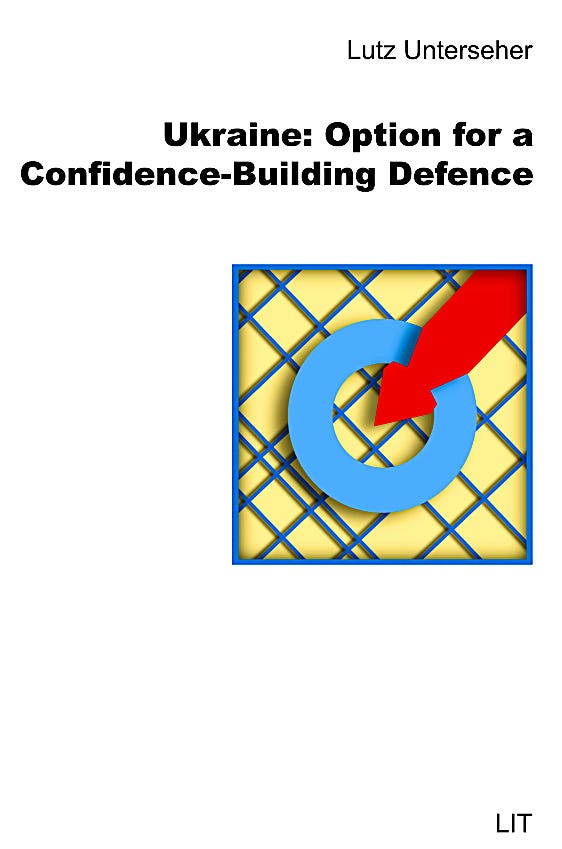
Ukraine: Options for a Confidence-Building Defense

by Lutz Unterseher, PDA guest publication, Berlin, LIT Publishing,  March 2024.  ➪ download (free) book: PDF

PDA is pleased to offer Lutz Unterseher’s book Ukraine: Options for a Confidence-Building Defense in English for the first time.

International politics looks grim for Ukraine — The country has lost the U.S. as its primary war sponsor.

Ukraine must discover and adopt new means to secure itself quickly.

This book offers a military security option for Ukraine that “helps people to help themselves.”

Untersher continues,

It is about self-sustaining, emphatically defensive military protection: without integration into a military alliance and suitable as a possible building block of an all-European security system.

For more about this book, see https://comw.org/pda/ukraine-a-future-with-a-self-sustaining-defense/

For a sketch of an all-European military security system see:  “European Army”: A Thought Experiment


Ukraine: Securing Its Future with a Self-Sustaining Defense

by Charles Knight, 20 February 2025

On February 12th, the new Secretary of Defense of the United States, Pete Hegseth, attended the Ukraine Defense Contact Group meeting in Brussels and addressed officials from some 50 nations. He was succinct and blunt in announcing the Trump administration’s policy for “stopping the fighting [in Ukraine] and reaching an enduring peace.”1 He told the group that Trump insists that “…this war must end…by diplomacy and bringing both Russia and Ukraine to the table.” Hegseth misspoke. “The table” he refers to is plural and of several types: tables, rooms, hallways, or Tweets. Ukraine was not invited to the Saudi-hosted negotiations between Russia and the U.S.!

With the new radical-right administration in power in Washington, Ukraine has lost its primary war sponsor. It is an understatement to say international politics looks grim for Ukraine.

Ukraine must quickly discover and adopt new means to secure itself.

We are pleased to announce that Lutz Unterseher’s book Ukraine: Options for a Confidence-Building Defense is now available in English for the first time. It is posted on our website as a free guest publication.

The book offers a military option for Ukraine that fits the present political/military crisis.  The author says his option can “help [the Ukrainian] people to help themselves.” Lutz continues,

It is about self-sustaining, emphatically defensive military protection: without integration into a military alliance and suitable as a possible building block of an all-European security system.

Lutz Unterseher, Ukraine: Options for a Confidence-Building DefenseLIT, Berlin, 2024. [PDF]

Considering that extraordinary changes are ongoing and that the book was published in German almost a year ago, I asked Lutz to provide a brief, updated introduction.  It follows.


Some Reflections on Recent Events Regarding Ukraine and Europe

by Lutz Unterseher, February 2025

The North Atlantic Alliance (aka, NATO) was a fabrication built on illusion. It was founded on the belief, mainly held by Europeans, that the United States would – in the face of a threat from the East – be willing to compensate for the relative weakness of NATO frontline forces (yet another myth) by going nuclear with a first-use of battlefield weapons and linking this deterrence to the strategic arsenal under the singular command of the U.S president. In the final years of the Cold War, after the Soviet Union had reached strategic nuclear parity with the U.S., an increasing number of U.S. security experts and politicians conceived of battlefield nukes as playing a role in a limited war in Europe. Finis Germaniae.

Monsieur Trump has now ended this belief system, known under the term extended deterrence, which served as the doctrinal basis for U.S. dominance over what had been euphemistically called partners for over half a century. This radical policy change has one essential advantage: namely, clarity.

Given the problems of cohesion of the Europeans, which became evident in their dealing with Monsieur Putin’s murderous regime, Trump has opted for another strategy to ensure American dominance.

He will seek bilateral relations with individual European countries, promising military support only if they dance to his fiddle. Those who cannot be brought to the dance floor, perhaps trying to preserve some degree of European unity, are being told, as the American umbrella is folding, to pay much more for their defense. Trump, thereby, expects to weaken Europe as a competitor in the world market.

By excluding Europeans from the Russian-American talks aimed at ending the Ukraine war, Trump has humiliated them and thereby de facto buried NATO as an entity in its own right. At the same time, he is telling individual European nations to earmark troops for an ill-defined security guarantee for Ukraine, a force the U.S. will not contribute its troops to. By bypassing NATO, Trump’s developing global strategy seeks to use European national forces as auxiliaries under U.S. suzerainty.

A better way for Ukraine and Europe, promising stability with affordability, can be had by Ukraine adopting a security regime of Confidence-Building Defense – enabling that country to defend itself. This posture, on the one hand, avoids provoking the other side (thereby defusing the situation) and, on the other hand, exploits the advantages inherent to the defense: achieving deterrence through robust denial. (After all, the Russian army can no longer be considered a giant.)

An essential condition for making such a scheme work is that the Ukrainian economy must get on a dynamic upward path and that many—especially young—refugees can be motivated to return. Both conditions depend on Ukraine’s speedy integration into the EU—a union that Trumpist machinations have not yet undermined, and that is not bleeding out due to outrageous military expenditures.


Here is a quick guide to reading the book:

It is a short book—87 pages—so you can read it all in one sitting, which we recommend. However, if you want to quickly get to the ‘meat’ of the military option for Ukraine, go to the Military Security section, starting on page 45. The ‘hard military stuff,’ including an illustrative force structure and cost estimate, is in The Path to Realisation section, starting on page 73.

Lutz Unterseher, Ukraine: Options for a Confidence-Building Defense LIT, Berlin, 2024. [PDF]

Lutz Unterseher, Ukraine: Options for a Confidence-Building Defense LIT, Berlin, 2024. [PDF]

Lutz Unterseher’s many books are available here, including this one in paperback.
More on Confidence-Building Defense are available here.

1  Hegseth’s short statement specifies at least a dozen radical changes in U.S. policy regarding Ukraine and Europe’s security. I will not recount them here. Instead, I refer you to the source, which is well worth viewing or reading.

War Report – the Internet’s best collection of thousands of articles and documents about the Iraq and Afghanistan wars

This site serves as an indexed archive of more than 14,000 documents and articles on the first seven years (2002-2009) of the U.S. wars in Afghanistan and Iraq. Included are news reporting and analysis, primary government documents, expert research and analysis, and informed commentary.

For a complementary source on the pre-invasion politics and planning for the Iraq War see: Wider ‘War on Terrorism’: It’s Construction in the First Year which covers September 2001 through October 2002, and that war’s antecedents.

The War Report (last updated and then archived in 2009) will remain an essential resource on the wars in Afghanistan and Iraq for many years to come. Some small percentage of the links on this site will go bad each year. In the case of bad links, you should be able to locate the publication by searching for the publication by name in quotation marks or by going to the personal web page of the author. You will often be able to find the publication on the Internet Archive WayBack Machine.

Occupation Distress – The effect of the wars in Afghanistan and Iraq on US armed forces and military readiness

visit ➪ HTML site

A categorized collection of hundreds of articles and reports on the effect of the wars in Afghanistan and Iraq on US armed forces and military readiness. 

Occupation Distress (last updated and then archived in 2009) will remain an essential resource covering the Afghanistan and Iraq wars for many years. A small percentage of the links on this site will go bad each year.

In the case of bad links, you should be able to locate the publication by searching for the publication by name in quotation marks or by going to the author’s personal web page. You will often be able to find the publication on the Internet Archive WayBack Machine.

Fantasy in Ukrainian War Scenarios – what will 2023 bring?

by Charles Knight, March 2023.

The present status of the war in Ukraine begs the question of whether anything like “decisive” warfare will occur this year?

Or will this war continue (since the summer of 2022) to uncannily mimic the often static battles of the Western Front during WWI?

In other words, will the war remain mired in mutual slaughter?

Presently, according to the many popular press narratives, the Russian winter offensive is concluding, and we await the spring and summer offensive by Ukraine.

It should be noted that there is no reason to believe that national leaders will follow popular press narratives. Offensives are risky business, and commanders often change their minds daily, especially regarding the critical factor of timing.

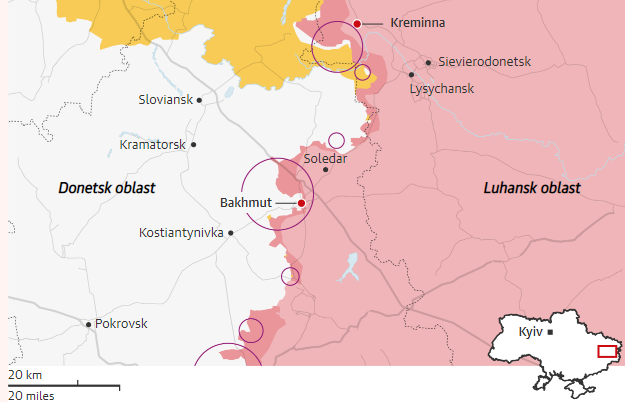
The Russians could try diverting the concentration of Ukraine forces readying for an offensive by opening their own offensive push at a place of their choosing. Or the Ukrainians could suddenly withdraw their troops from the threatened (and largely destroyed) town of Bakhmut while beginning one or more major offensives in Luhansk, Kherson, or Zaporizhzia.

There are many possibilities.  There are many paths to military success or failure.

None of this is predictable.  The generals are certainly not going to tell us about their plans.

Meanwhile, the war is not only terribly costly to Ukraine and Russia but much of the world pays through global economic disruption.

In poorer areas of the world, misery has surely increased because of the war.  There are growing signs that the world is growing weary.  An Economist report has found “…an emerging disconnect between wealthy Western economies and the Global South.”

Now That They Made a War – 1 year & 20 years after the invasion of Iraq

The following is a Postscript (March 2004) to the report (September 2002) of a detailed exercise I undertook to apply the preemptive counter-proliferation guidelines developed by Dr. Barry R. Schneider, director of the U.S. Air Force Counterproliferation Center, to the case of Iraq. 

The 2003 Iraq War can be described as a preventive counter-proliferation war.  Schneider’s guidelines are for a preemptive war.  A preventive war is several steps closer to a war of aggression than a preemptive war — it is almost certain that any nation that is the target of a preventive war will view it as a war of aggression.  If the Kremlin were inclined to use this terminology, it would call its present war in Ukraine preventive, while Ukraine certainly understands it to be a war of aggression.  Therefore, we should expect the guidelines for a preventive war to be more stringent than those for a preemptive war. 

I completed and published the exercise findings in September 2002, six months before the invasion of Iraq.   

~ Charles Knight, 19 March 2023

Noted: Of Nuclear Bluffs and Red Lines in the Ukraine War

by Charles Knight

In his New York Times essay of 02 January 2023, “Putin Has No Red Lines,” Nigel Gould-Davies calls the use of the figure of speech “Red Lines” a “lazy metaphor.” He then counters by saying, “Strategy needs rigorous thought.”

Unfortunately, he skips the rigor of discussing the crucial difference between publicly declared ‘red lines’ and those ‘privately’ delivered to other national leaders by a President or by way of ambassadors.

Gould-Davies probably winced, as I remember doing when Barack Obama spoke his ‘red line’ warning concerning Assad’s possible use of chemical weaponry in Syria. The President should have refrained from a public posture and sent that message through diplomatic channels.

By going public, Barack Obama set himself up to pay a domestic and international political price when later he appeared to avoid carrying through with the response he had promised in his public declaration.

Diplomats do not need to use the imprecise language of ‘red lines’ when pointing out that “if you do X, there will be grave consequences.” And they can get quite specific if they need to drive home the message.

Nigel Gould-Davies advocates for rigorous strategic thought. Again, he fails this standard when he discusses the dangers of escalation in Ukraine.  He discusses the matter as though it is an ordinary case of diplomatic bargaining.  It is not.

A wrong step in this war will kill millions, perhaps billions, worldwide.  He suggests that the essential care required in this fraught situation is the equivalent of a “bargaining concession.”   Care and restraint in a war in Europe are not concessions, especially regarding the risks of nuclear war.  They are an essential aspect of the support the U.S. is providing Ukraine.

A lazy metaphor frequently used about this war is the one about ‘calling bluffs’ as in a Poker game. Once in a while, Poker games end with the death of a player but never lead to the mass deaths of a nuclear war.

Calling bluffs on nuclear escalation is extremely hazardous moral ground. 

There can be no justification for anyone calling a nuclear bluff and inadvertently setting the war in Ukraine on an escalator to a global nuclear exchange between the U.S. and Russia. It will not matter in the least who is to blame if the result is nuclear war.

Avoiding the escalator to nuclear war between the U.S. and Russia requires the U.S. to practice disciplined self-restraint.

Most importantly, The U.S. must not take the risk of uniformed U.S. soldiers fighting Russian soldiers in Ukraine. This is a critical “bottom line,” if not a red line, for U.S. policy.

Luckily, President Biden understands this. Perhaps this is because he is old enough to remember the unwritten rules of the Cold War, a time when the Soviets and the U.S. sought to avoid direct warfare, even in places far from their respective borders. They did this because they had a realistic appreciation of the existential danger of escalation of conventional war, especially in Europe, to the uncontrollable use of nuclear weapons.

The present war in Ukraine is on Russia’s border! That fundamental fact of geography must give all supporters of Ukraine pause. Geography and the large arsenals of nuclear weapons that Russia and the U.S. possess make this war extraordinarily dangerous for the world.

~~

Of related interest:

Putin is not bluffing with his nuclear threats; What do President Biden and his national security team know that makes them take Russian President Putin’s nuclear threat so seriously? Seven inconvenient facts,” by Graham Allison, Boston Globe, October 3, 2022

We are On a Path to Nuclear War,” by Jeremy Shapiro, War on the Rocks, October 12, 2022

The ‘Stable Nuclear Deterrent’ collapses in the Ukraine War,” by Charles Knight, October 17, 2022

World War III Begins With Forgetting,” by Stephen Wertheim, New York Times, 03 December 2022


The “Stable Nuclear Deterrent” collapses in the Ukraine War

➪ see full post: HTML 

by Charles Knight, 17 October 2022

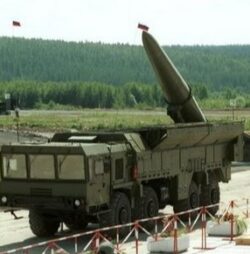
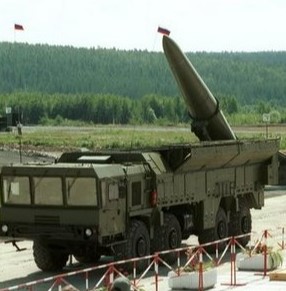
The Ukraine War presents a more dangerous nuclear risk than the Cuban Missile Crisis and demands more careful rationality and restraint by Russia and the US. Can we Iskender nuclear capable missiledepend on that rationality and restraint? Probably not.
However, there are some things that the US and NATO can do to reduce the probability that Moscow will opt to use nuclear weaponry. This article lists those steps.

The article also explains why any remaining “stable mutual deterrence” between the US and Russia is presently extremely fragile. It concludes:

The US/NATO war effort in Ukraine must remain deliberately limited. Beyond that, we must resist the usual war fevers (beset with visions of victory over evil) that take nations toward total war.

The “Stable Nuclear Deterrent” collapses in the Ukraine War

Charles Knight, 17 October 2022

Iskender nuclear capable missile

A society must assume that it is stable, but the artist must know, and he must let us know, that there is nothing stable under heaven.

~ James Baldwin, 1962

The comforting narrative of a dependable and stable nuclear deterrence between the US and Russia has been thrown into disarray by the War in Ukraine. This narrative, propagated widely in the years following the Cuban Missile Crisis in 1962, held that both the Super Powers fully appreciated that they could not “win” a nuclear battle and, therefore, would avoid direct conventional warfare, which might then quickly escalate into nuclear war. In a necessary corollary, it was thought that Russia and the US would make every effort to avoid a conventional war in Europe. Why? Because there are so many paths to escalation to nuclear war in Europe. Elsewhere in the world, US and Russian interests were more diffuse and, therefore, not so vital.

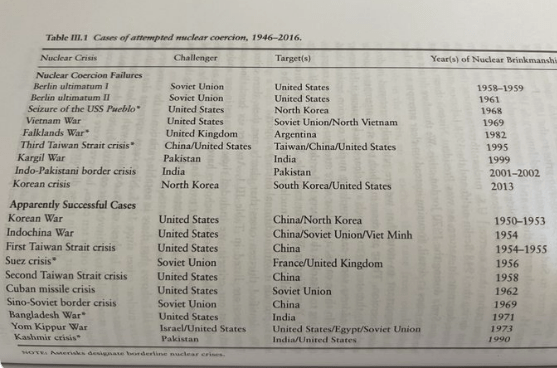
Recently Political Scientist Matt Fuhrmann posted on Twitter (@mcfuhrmann 10/10/22) a chart of “Cases of Attempted Nuclear Coercion 1946-2016.” It is from his and Todd Sechser’s 2017 book, Nuclear Weapons and Coercive Diplomacy, p. 128.  Fuhrmann’s Tweet begins: “Wondering how Putin’s nuclear threats over Ukraine compare to other nuclear crises?”

In their book, Fuhrmann and Sechser list 19 cases of attempted nuclear coercion over 75 years. I use the Fuhrmann/Sechser assembly of instances of attempted nuclear coercion as a starting data point to examine what the Ukraine War might mean for the notion of a stable (mutual) nuclear deterrent between two major nuclear powers.

The Construction of a “Stable Nuclear Deterrent”

I ask the question,   Is the nuclear deterrent aspect of the US/Russian relationship presently stable in any meaningfully reliable way?

Cases of attempted nuclear coercion 1946-2016Theoretically, for an effective and stable mutual nuclear deterrent, a credible capability must exist to respond to a nuclear attack with an overwhelming retaliatory attack. However, this was not the case for the Soviet Union until the end of the 1950s or the beginning of the 1960s. This meant that the US had about fifteen years following WWII in which it had relatively unrestrained nuclear options and could attempt nuclear coercion or compellence of adversaries without risking devastating retaliation by the target country.

The Cuban Missile Crisis marks the time when the US came to grips (for both the professional military leaders and the public) with the reality of mutually assured destruction … and thus, there was the need to invent a notion of a stable nuclear deterrent. Not that the nuclear arms race ceased after the Cuban Missile Crisis. It continued until the end of the Cold War (and has recently resumed.)

Nor did the US or the Soviet Union refrain entirely from attempting nuclear coercion. But Fuhrmann and Sechser only cite the 1969 threat by the US during the Vietnam War and the complicated multi-party threats during the 1973 Yom Kippur War as instances of attempted nuclear coercion in wars in which both the US and the Soviet Union were intensely interested parties. These should be counted as instances in which threats to use nuclear weapons locally could have escalated into a nuclear war between the great powers.

What did change after the Cuban Missile Crisis is that only a minority in the US leadership ranks believed there was a realistic chance to return to the heady days in the 1950s when it was possible to believe in the efficacy of nuclear compellence targeted at a near-peer nuclear power.


What does the history of attempted nuclear coercion tell us about the situation in Ukraine?

In this article, I discount all the instances in the Fuhrmann/Sechser list before 1960, leaving 13 cases over the 56 years from 1960 to 2016.

From those, I further remove those that do not pertain principally to conflict between the US and the Soviet Union/Russia. We then have left just 3 cases: the Cuban Missile Crisis in 1962, the Vietnam War in 1969, and the Yom Kippur War in 1973.

Of these three, only the Cuban Missile Crisis qualifies as a direct big-power strategic confrontation. In Vietnam and the Middle East, the US and the Soviet Union were engaged as supporters of different sides in a local conflict. It is thought that these are the sort of conflicts in which the big powers are not likely to risk all by using nuclear weaponry.

In the run-up to the Cuban Missile Crisis, each side in that dangerous strategic confrontation had deployed medium-range strategic missiles to the territories of their allies in the close vicinity (Turkey and Cuba) of their adversary. As a result, both felt that the other nuclear power had critically threatened vital strategic interests.

Leaders on both sides in that crisis had to maintain an intense rational focus to arrive at a compromise settlement that would avoid nuclear war. Yet, despite their demonstrated rationality, there were several unexpected developments during the crisis not under the leadership’s control and which could have led to disaster. (See, for instance, Michael Dobbs, “I’ve Studied 13 Days of the Cuban Missile Crisis. This Is What I See When I Look at Putin,” New York Times, 5 October 2022.)

In some important ways, the Ukraine War presents a greater nuclear risk than the Cuban Missile Crisis. Therefore, it demands even more careful rationality and restraint by Russia and the US.

By making threats to use all means at his disposal to protect the existential interests of Russia and its territorial integrity, Putin is using nuclear coercion to limit his adversary’s options in the war. However, as with most other instances of nuclear coercion, this is a highly risky tactic and inherently unstable. (See Steven Pifer, “Pushing back against Putin’s threat of nuclear use in Ukraine,” Bulletin of the Atomic Scientists, 10 October 2022, for how Putin has attempted to limit and restrain US/NATO support for Ukraine by repeated reference to his military nuclear options.)

Several things make the Ukraine War nuclearly fraught:

  1. Putin has annexed several Ukrainian oblasts, effectively making them into vital Russian territorial interests to defend from the NATO-backed challenge. He has effectively created a situation that fits the criteria in Russian military doctrine for using nuclear weaponry. I assume he knows what he was doing in this regard. His views on the role of nuclear forces in defending Russian territory are clear.
  2. The very success to date of the Ukrainian defense increases the perceived “need” for Moscow to reach for high-risk military options.
  3. This is a war in Europe, precisely the sort of conflict that the Soviet Union and the US learned to avoid after the Cuban Missile Crisis. We are lucky that the Soviet Union and the US learned that lesson. It helped us to survive the Cold War. Unfortunately, with the launch of the Ukraine War, that wise restraint has been destroyed. There are so many ways wars in Europe can go wrong:  too many nations very near each other that have nuclear weapons  — most all with complex histories and cross-cutting webs of interests. With human emotions added into the mix, any war in Europe can easily and quickly escalate into irrational levels and types of violence.


What NATO and the US Must Do to Avoid Escalation to Nuclear War?

Some things can be done by the US or NATO nations to reduce the probability that Putin will order the use of nuclear weapons:

  1. The US and NATO must make sure Putin and other Russian leaders know that there are realistic “exit ramps” from their war effort. Likewise, the Kremlin must know there are options to end this war that avoid oblivion.
  2. As Kennedy smartly pursued talks behind the scenes with the Soviets during the Cuban Missile Crisis, so must Washington pursue similar discussions with the Russians now. Domestic political pressures will necessitate that these talks be secret. They may not produce serious negotiations soon, but they serve to maintain a relationship and take psychological pressure off the Kremlin leaders that might otherwise incline them to use nuclear weaponry.
  3. It is essential to make clear to the Kremlin a willingness to lift specific categories of economic sanctions when a negotiated war settlement is achieved.
  4. The US has shown some wise restraint in the qualitative aspects of its substantial military support of Ukraine. This support has included not only ordnance and some sophisticated equipment but also superb battlefield intelligence. Nevertheless, the US must continue to ensure that no US service people become directly engaged in the fighting or are in harm’s way on the ground, sea, and air in the vicinity of the war. Deaths of US soldiers in this war could result in intense domestic pressure on Washington to retaliate against Russia, risking rapid escalation.
  5. The US must resist suggestions that it supplies Ukraine with longer-range weaponry which could hit targets deep inside Russia. Moreover, Washington must restrain impulses to involve its military forces in the air or naval interdiction of Russian military platforms.

To return to the central question about the stability of nuclear deterrence in Europe between Russia and the US/NATO, it should be clear that any remaining mutual deterrence is presently highly fragile. It lacks a stable platform of shared strategic understanding.

And to the extent that we would rely on human rationality as a factor in deterrence, we must realize that rationality only goes so far. Indeed, presently, a very short way. Reflect for a moment on the recent history of big-power leadership. The US just went through four years with Donald Trump as commander-in-chief. It should be clear by now that neither was he inclined toward disciplined rationality nor did he have the most basic understanding of the limited “usefulness” of nuclear weapons. Furthermore, he did not demonstrate any interest in learning about such.

Putin’s degree of commitment to and capacity for rationality in his leadership of Russia remains unknown. His recent decisions about Ukraine do not give one confidence in that regard. Joe Biden is an old Cold Warrior, and no doubt learned a few things about what was safe to do and what wasn’t. However, he is famous for impulsive statements in public. We must hope he is more deliberate and careful in the war room.

Nonetheless, the historical record of national leadership informs us that we can not rely on rationality to carry the day, especially in the pressure cooker of war. Presently the world is utterly vulnerable to any failure of Biden or Putin to stop short of direct warfare between their respective military forces! The paths on which that failure could happen multiply the longer the war continues.

The US/NATO war effort in Ukraine must remain deliberately limited. Beyond that, we must resist the usual war fevers (beset with visions of victory over evil) that take nations toward total war.

Noted: The origin of the 38th parallel division of Korea – the map

noted by Charles Knight, 31 January 2022.

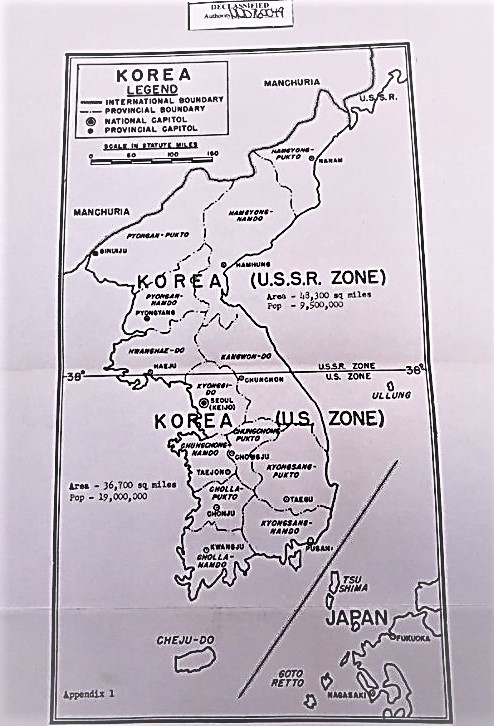
Below is the US Army map (from the US National Archives) that designated conceptually the division of Korea after WWII. The division was intended as temporary occupation zones by the armies of the then-allied USSR & USA following the departure of the Japanese colonist army and administration.


1947 Map of Division of Korea

The politics of Korean reunification and self-rule were not successfully negotiated in the 1940s or the 1950s and remain unresolved to this day.  Today, there are strongly opposed ideological nationalists on both sides of the 38th parallel who refuse to settle political differences. However, it may well be China and the USA who have the greatest interest in Korea remaining divided because the peninsula’s division is thought to serve their geostrategic preferences.

Resolving the Ukraine Crisis

⇒ see full post: HTML

by Carl Conetta, 26 Jan 2022


The basic elements of a solution to the Ukraine crisis are ready at hand – and have been since Feb 2015. These are the provisions of the Minsk II Protocol. This Reset Defense blog post reviews the impediments to Minsk II implementation and suggests a way forward. The key to progress is cooperation among the outside powers supporting the Ukraine contestants (i.e., Kyivv government and rebels). These benefactors must make their material support contingent on the near-term implementation of Minsk II. Another key element missing from the current agreement is the provision for a substantial peacekeeping and monitoring force to oversee the demilitarization of the area, temporarily control its external and internal borders, and secure an election.
 

Noted: Attending to the Historical Perspective of the Other Side in Nuclear Proliferation Diplomacy

by Charles Knight, 09 January 2022

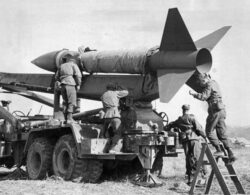
Honest John missile

Iran – Israel/USA


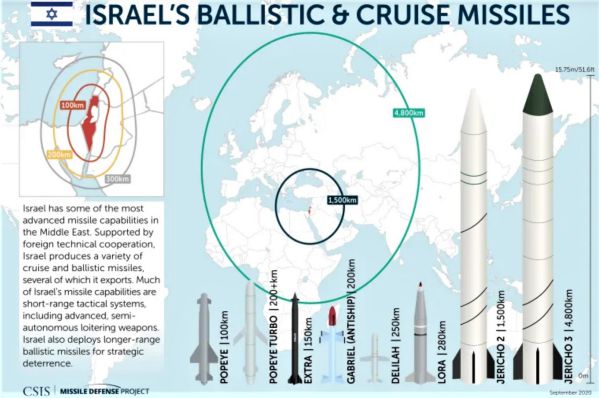
Israel Ballistic & Cruise Missiles It is thought that Israel built its first deliverable nuclear weapon in 1967. Israel has never acknowledged possession of nuclear weapons. Although U.S. Presidents Kennedy and Johnson vigorously objected to Israel’s development of nukes, by 1969, the U.S. had joined Israel in a policy of deflective silence (“deliberate ambiguity“). Because of this official silence, it is difficult to estimate how many nuclear weapons Israel has today. A careful review of available sources in 2014 found that Israel “has a stockpile of approximately 80 nuclear warheads.”  It is likely somewhat larger today.

The precise details of Israel’s nuclear arsenal are less important than the simple fact that the Iranian government is well aware of Israel’s nuclear arsenal.  Their intelligence services have certainly supplemented the open-source information summarized above. They also know that they are the primary target of these weapons.


North Korea – South Korea/USA


https://upload.wikimedia.org/wikipedia/commons/c/cb/1958-02-06_Atomic_Weapons_come_to_Korea.ogv
Several years after the signing of the Korean War Armistice in 1953, the Joint Chiefs informed President Eisenhower of an intelligence finding that North Korea was building up its armed forces beyond the limits stipulated in the armistice agreement.  Eisenhower believed that newly developed tactical nuclear weapons could dissuade the North Koreans from any inclination they might have to renew fighting on the peninsula.  Despite opposition from his State Department, the President ordered tactical nukes sent to Korea. The above video celebrated their arrival in 1958.

Thus it was that the U.S. introduced nuclear weaponry onto the Korean Peninsula. The number of U.S. tactical nuclear weapons increased after 1958, reaching a peak of approximately 950 warheads in 1967. As the Cold War ended in 1991, the deployment of tactical nukes to Korea ended. Presently, South Korea is explicitly included under the U.S. doctrine of extended deterrence.
The North Koreans are, of course, aware of this history and at whom the weapons are targeted.

Discussion


As 2022 begins, North Korea is a de facto nuclear state with a minimum deterrent arsenal in ongoing development.  Iran is said to be refining fissile materials and on the cusp of constructing its first nuclear weapon.  Both states are currently subject to severe economic sanctions.  Negotiations or diplomatic discussions, whether formal or behind the scene, continue.  In the case of Iran, there have been speculative forecasts of imminent counter-proliferation strikes by Israel.

I have included two particular sets of facts in this history note.  Both are relevant to present instances of actual or potential nuclear proliferation. I have edited each to make them as “simply factual” as I am able. Nonetheless, I would not fault a reader’s suspicion that I have selected them to build a partisan narrative, as is often done with selective facts.

My intent is quite different. The instances of history I have presented are illustrative of the kind of history that will strongly affect the “other side” in a negotiation.  In each case, they are examples of vital interests involving existential threats that are ever-present at the negotiating table, even if they are not on the immediate agenda.

Attempts to compel the other side to surrender its vital interests in negotiations usually fail.  For diplomacy to succeed it is necessary to attend to the historical perspective of the other side. Without that consciousness, two sides to a dispute cannot hope to negotiate an agreement on how to meet the vital security needs of both parties.

To End America’s Longest War the US-Korea Alliance Must Change

➪ see full post: HTML   PDF

by Charles Knight, initially published by the Institute for Peace and Diplomacy, 22 December 2021.

This article reports on South Korean President Moon’s latest peace initiative, which has achieved an agreement “in principle” by the U.S., North Korea, China, and South Korea to negotiate an “end-of-war declaration.”  Recently, the U.S. appeared to have modified its nuclear disarmament approach, accepting that “step by step” is the realistic way to proceed.  A few article excerpts:

A step-by-step approach requires give and take, [implying] that the U.S. might ultimately have to settle for some tempering of the North’s nuclear arsenal rather than the complete, verifiable, and irreversible disarmament (CVID.)

…a strategy of waiting patiently for sanctions to force Pyongyang’s capitulation…overlooks how existentially critical nuclear weaponry has become in North Korea’s strategic calculus. Without an adequate national security alternative, Pyongyang will most likely choose to suffer indefinitely under the economic pain of sanctions, however severe.

Alliances cannot and do not last forever. To endure from one era to another, they must adapt and change. If Washington returns to old habits of leveraging its hegemonic will to control affairs on the Korean Peninsula, it may reap the unintended consequence of hastening the end of the alliance.

To End America’s Longest War the US-Korea Alliance Must Change

by Charles Knight, originally published by the Institute for Peace and Diplomacy, 22 December 2021.


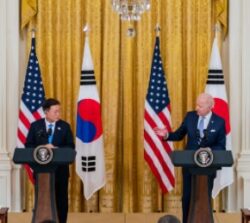
While visiting Australia in mid-December, South Korean President Moon Jae-in announced that North Korea, China, South Korea, and the United States have agreed on an end-of-war declaration at the “fundamental and principle levels”. Since 1953, when an armistice ended large-scale combat on the Korean Peninsula, the parties to that war have not signed a peace treaty. Instead, they have prepared for war as though it could or should resume at a moment’s notice.

Moon first proposed the ‘end-of-war declaration’ in a speech before the UN in 2019. He renewed that call before that same body this past September, inviting diplomats from the U.S., South Korea, and North Korea to meet, negotiate, and sign a declaration. He also called for including China in a four-party declaration. The ‘end-of-war’ notion is formulated as an alternative to a formal peace treaty that remains politically out of reach, especially after the failure of the Hanoi Summit in 2019. As such, President Moon hoped that 3- or 4-party talks might lead to a renewal of negotiations regarding the broader issues of peninsular peace.

In his Canberra remarks, Moon pointed out that “we are not able to sit down for a negotiation on declarations,” because of Pyongyang’s insistence that the U.S. and South Korea “end hostile policies” before any talks could proceed. As the Deputy Director of the Publicity and Information Department of North Korea’s ruling Workers’ Party Kim Yo-jong stated in September, the first step is to “ensure mutual respect toward one another and abandon prejudiced views, harshly hostile policies and unfair double standards toward the other side.” Of course, this conditionality lacks specificity. Yet, judging from previous North Korean negotiating positions, Pyongyang is likely signaling that moving to meaningful negotiations will require the U.S. to provide offers of sanctions relief and reduce its military presence and joint exercises in the South.

The United States, for its part, still insists on the unilateral nuclear disarmament of North Korea. Numerous issues of mutual interest to Pyongyang and Seoul are considered secondary and contingent on nuclear disarmament. Given that North Korea is now a (minor) nuclear power that considers nuclear weaponry essential to its strategic posture, Washington’s position is equivalent to a refusal to negotiate from Pyongyang’s perspective. Until quite recently, the Biden administration’s behavior suggested it had adopted the Obama administration’s notion of “strategic patience,” a stance that amounts to taking no actual diplomatic initiatives. Recently, this has changed—with the U.S. now signaling that it is ready to talk, take a “step-by-step” approach, and honor the framework agreed upon in the 2018 Singapore Joint Statement made by Kim and Trump.

A step-by-step process will mean give and take. Moreover, it implies that the U.S. might ultimately have to settle for some tempering of the North’s nuclear arsenal rather than the complete, verifiable, and irreversible disarmament (CVID) it was originally seeking. Not that Washington is ready to acknowledge this publicly. In fact, the recent G7 meeting statement reasserted the CVID standard.

Washington might argue that its affirmation of CVID is justified given that the Singapore Statement includes a provision which declares: “Reaffirming the April 27, 2018 Panmunjom Declaration, the DPRK commits to work toward complete denuclearization of the Korean Peninsula.” Nevertheless, the formulation “denuclearization of the Korean Peninsula” is a subject of contention, because North Korea and the United States interpret its meaning differently.

By reaffirming the Singapore Joint Statement as a basis for negotiations, however, the U.S. hints that it is prepared to negotiate with the North on the precise meaning of “Peninsula Denuclearization”. For instance, might the U.S. eventually agree to stop flying dual-capable (nuclear and conventional) bombers over the peninsula?

Meanwhile, the U.S. Treasury Department recently announced new ‘human rights’ sanctions, blacklisting North Korea’s Central Public Prosecutors Office, a former Minister of Social Security, and the new Minister of People’s Armed Forces. Whatever value these sanctions might have in their particulars, they certainly send a mixed message to North Korea about prioritizing peace and disarmament negotiations.

Things change, however, and the situation in Korea is not stable. For several years, both North and South Korea have been in a short-to-medium range missile arms race, developing and testing missiles carrying greater payloads over longer distances. As Sangsoo Lee of the Stockholm Korea Center observes: “What we are witnessing today on the Korean Peninsula is the same kind of action-reaction dynamic that developed between the United States and the Soviet Union during the Cold War—a destabilizing and expensive arms race.” This rings true, as, despite Moon’s desires for peninsular peace, he has not as of yet demonstrated the political will to reign in ROK’s military establishment.

In 2018 Pyongyang decided, at the urging of Russia and China, to induce negotiations with the U.S. by initiating a moratorium on testing new ICBMs and nuclear warheads. However, as time goes by, Chairman Kim faces increasing pressure from his military to end this moratorium. Pressure is unlikely to subside, for Military planners in the North are aware that the U.S. has been preparing its Air Force and Navy for conventional preemptive operations to prevent the successful wartime use of North Korean nuclear weapons. Pyongyang also understands that the deterrent value of its partially-developed
nuclear arsenal diminishes over time absent ongoing improvements, which require periodic testing. Therefore, if serious negotiations do not begin soon, one could expect the DPRK to end its testing restraint.

While many in Washington are content with a strategy of waiting patiently for sanctions to force Pyongyang’s capitulation, this approach overlooks how existentially critical nuclear weaponry has become in North Korea’s strategic calculus. Without an adequate national security alternative, Pyongyang will most likely choose to suffer indefinitely under the economic pain of sanctions, however severe.

President Moon has consistently sought a path toward peace with North Korea. Achievements in this regard include facilitating several intra-Korean summits and the three meetings between Trump and Kim. Economic opening to North Korea has been at the core of Moon’s program, but Washington’s sanctions regime has blocked most initiatives. The end-of-war declaration, agreed to “in principle” by four major stakeholder nations, may well be the last significant peace initiative of his term. Yet, even if it goes no further than the symbolic agreement announced in Canberra, Moon, as a practical politician, likely consoles himself with a secondary objective of burnishing his political party’s reputation for pursuing peace during the run-up to the next election.

The impasse in Korea raises profound questions about the U.S.-South Korea alliance. What is an alliance’s value for peace and security if a faraway great power effectively vetoes peace initiatives by a middle power dealing with a potential war situation in its immediate neighborhood? Of course, some will argue this to be simply the latest example of Thucydides’ Melian dilemma: “The strong do what they can, and the weak suffer what they must.” But this simple formulation never captures the full complexity or mutability of the real world. It did not do so for the Athenians, nor the Melians, and neither does it for us today.

Alliances cannot and do not last forever. To endure from one era to another, they must adapt and change. If Washington returns to old habits of leveraging its hegemonic will to control affairs on the Korean Peninsula, it may reap the unintended consequence of hastening the end of the alliance. After all, South Korea is much stronger economically and militarily than it was a few decades ago. It has earned substantial agency in its Northeast Asian geostrategic maneuvers, and it demands certain strategic autonomy independent from Washington. The U.S. would be wise to recognize this and accommodate Seoul. A relationship of partners will be more productive than the archaic patron-client one that actively shuns South Korean interest. And such strategic recalibration would come with the added benefit of helping end America’s longest war.

Principles for Building Confidence and Stability into National Defenses and International Security – toward sufficient, affordable, robust, and reliable defense postures

➪ see full-text: HTML or  PDF

by Charles Knight and Carl Conetta, 01 February 2021 (revised 15 March 2022.)  

Adapted from Carl Conetta, Charles Knight, and Lutz Unterseher, “Building Confidence into the Security of Southern Africa,” PDA Briefing Report #7. Commonwealth Institute, 1996.

balanced & stable

By bringing military structures into line with defensive political goals, the non-provocation standard facilitates the emergence of trusting, cooperative, peaceful political relations among nations. In contrast, any doctrine and force posture oriented to project power into other countries is provocative — unless reliably restrained by political and organizational structures.

Principles for Building Confidence and Stability into National Defenses and International Security

…toward sufficient, affordable, robust, and reliable defense postures

by Charles Knight and Carl Conetta, 01 February 2021 (revised 15 March 2022.)


armed forces with stability and balance


Nations invest vast sums in armed forces,

But will these assets deliver on their promise to defend the nation against aggression reliably?

Will armed forces provide national defense without contributing to international tension, domestic instability, or economic distress?

These questions remind us that there is more than one way a defense posture can fail – and also that success has multiple dimensions and objectives.


Military Stabilization

Military stabilization requires an appropriate and affordable defense establishment and a sufficient, steadfast, and non-provocative defense posture.

Military structures must also avoid aggravating an existing or potential civil conflict. For countries that have experienced severe ethnic and political strife, the national security apparatus itself must not contribute to centrifugal forces.

Military functions and police functions must avoid politicization.  Police functions must not be militarized. The composition of forces should reflect the ethnic composition of the nation as closely as possible.

Full-time, part-time, national, and local forces should be thoroughly integrated and interdependent to ensure control by national civilian authorities even in times of great stress to political consent. Full-time troops should generally serve nationally, while more part-time troops may serve locally.


Appropriate Defense

An appropriate defense establishment is suitable for the particular society it serves. Accordingly, nations should be circumspect about the imitation of foreign military structures, preferring instead to build them according to national character and the skills of their people.


Affordable Defense

An affordable defense will achieve security within their existing resource and demographic constraints. To meet affordability criteria, nations that are confident of their own defensive intent can exploit the structural and operational efficiencies of a defensive orientation. These home-court advantages include the high morale of troops defending home territory, intimate knowledge of the terrain, shorter lines of supply and communication, and the opportunity to prepare the likely combat zones intensively.

The inherent efficiencies of a defensive orientation also make it easier to reconcile the confidence building defense criteria of sufficiency, steadfastness, and non-provocation.


Sufficiency

Sufficiency refers to how well a defense posture matches a threat matrix. The degree of “match” involves both qualitative and quantitative aspects of the threat(s).

A broad review of national objectives is crucial in providing a context for the measure of sufficiency. This process will help specify what is to be protected and set the level of defense or deterrence certainty that a nation wishes to attain. Once objectives are clear, it is possible (although by no means easy) to determine military sufficiency. Without such a process, it is impossible to assess sufficiency:  The resulting size and composition of defense forces will remain subject to political whim.

In some cases, states will discover that they cannot hope to afford the highest degree of deterrence with a transparent and assured capability to quickly and efficiently defeat any aggression. This is a common dilemma for many smaller states with larger and more powerful neighbors. However, lesser objectives may be within reach and desirable, for instance, the capacity to substantially raise the cost of any aggression and buy time for diplomatic pressure and supportive intervention from allies.


Steadfastness

steadfast posture combines the qualities of robustness and reliability. Although, in some sense, encompassed by the notion of sufficiency, “steadfastness” refers to intrinsic (that is, non-relational) aspects of a defense posture. “Integrity” and “cohesion” are approximate synonyms for steadfastness.

 Robustness refers to a defense array’s capacity to absorb shock and suffer losses without catastrophic collapse. Instead, the defense maintains a cohesive combat capability. Even when facing an overwhelming threat level, a robust defense force will degrade gracefully, buying time for re-grouping, mobilization of reserves, diplomatic intervention, or outside assistance.

As a general rule, a steadfast and robust military posture will not exhibit an over-reliance on concentrated forces and base areas which provide lucrative targets for an enemy. Nor will it depend on a narrow set of technologies that an enemy can counter through a dedicated innovation and acquisition program.

Reliability is the second aspect of steadfastness. It refers to the military’s capacity to perform as planned with high confidence across a wide variety of environmental circumstances. A reliable defense will avoid the security gamble of high-risk operational plans or dependence on immature or poorly integrated technologies.

Reliability is also a function of social relations in society at large, in the nation’s armed forces, and in its personnel’s motivation and training. A reliable military is motivated and ready to conscientiously serve the state in a role that is understood to be both important and limited.


Non-Provocation and Confidence Building

A defense posture is non-provocative if it:

  • embodies little or no capacity for large-scale or surprise cross-border attacks and
  • provides few, if any, high-value and vulnerable targets inviting an aggressor’s attack.

These guidelines pertain most strongly to the problem of crisis instability, those periods of rising political tension during which the fear of (and opportunity for) a preemptive attack may precipitate an otherwise avoidable military clash.  Beyond crises, a non-provocative posture will affect other nations’ perceptions of threat and, consequently, their defense preparations.

The non-provocation standard also addresses the security dilemma by reducing reliance on offensively-oriented military structures. In so doing, it aims to minimize the threat of aggression inherent in any organized armed force. Such threats often stimulate arms races and countervailing offensive doctrines. Moreover, by bringing military structures into line with defensive political goals, the non-provocation standard facilitates the emergence of trusting, cooperative, and ultimately peaceful political relations among nations.

In contrast, any doctrine and force posture oriented to project power into other countries is provocative unless reliably restrained by political and organizational structures.

The institutionalization of confidence- and security-building measures (CSBMs) can normalize the exchange between states of doctrinal and defense planning information and provide forums for assessing the regional impact of various national defense planning options. Confidence building defenses (CBD) include most types of CSBMs. While CSBMs emphasize communication and procedural matters, confidence building defense pays particular attention to military structures and doctrines and their effect on international confidence and national stability.


Implementation

Implementation of an effective confidence building defense must consider context, international relations, and a process of optimization.

Defense options that minimize interstate tension and distrust should be preferred. Planning must be sensitive to the provocative nature of many military options.

Even forces optimized for defense will retain considerable offensive capability on the tactical level. This offensive capability often represents a security threat for neighboring states and may have strategic significance, especially when extensive power asymmetries exist.


Optimization

The planning problems inherent in the simultaneous objectives of affordability, robustness, reliability, and non-provocation require thoughtful attention to optimization.

Optimization of the application of resources toward achieving objectives should be a goal of any institution. Accordingly, military development policies must consider their effect on the matrix of intra- and international social, political, and economic relations. Only then can military-technical considerations, such as the tactical performance of particular weapons platforms, be understood for what they are: a necessary but insufficient basis for policy optimization.

Weaponry, platform complexes, communications systems, and equipment for transport and field engineering are the principal instruments of military operations. In conditions of limited resources, choosing what combination of military instruments to acquire is critical. However, these decisions are complicated because there is no such thing as a defensive weapon, per se.  Every weapon can be used offensively or defensively.

The most effective indicator of military confidence-building is in a nation’s overall military posture, unit compositions, and the accompanying doctrine for employment. Consequently, civilian leadership must be familiar with and be able to articulate both aspects of a confidence-building defense.

~~

Adapted from Carl Conetta, Charles Knight, and Lutz Unterseher, Building Confidence into the Security of Southern Africa, PDA Briefing Report #7. Commonwealth Institute, 1996. https://www.comw.org/pda/sa-fin5.htm (accessed 17 January 2021)

 ~~

PDF version

Don’t Buy a Cold War with China: It’s a Bad Deal!

by Charles Knight, 31 January 2021.

During the last decade, we entered a new strategic era that will have large and lasting effects on the international and domestic policy and position of the United States.

An emergent sign of this new era was Russia’s decision in 2015 to intervene in the Syrian civil war in support of the Damascus government. This deployment was the first significant “out of area” military intervention by Russia since the demise of the Soviet Union.

While many Western commentators characterize Russian actions in Ukraine and Syria as ‘resurgent aggression,’ a more accurate assessment is that Kremlin leadership seeks to halt that country’s long post-Soviet decline in global influence by addressing perceived national security deficits. In Ukraine, Russia has sought to shore up its flanks against NATO expansion in its near-abroad. Russian forces have also deployed to protect Mediterranean and Middle East interests represented by its long-time Syrian ally and, in particular, the naval base at Tartus and, fifty kilometers to the north, the new tactical air base at Latakia.

Although Russia has been militarily assertive in words and deeds, the most significant and dangerous strategic developments involve China. The reason for this is quite straightforward: Russia is presently a relatively weak state and will likely be a declining power for years to come. On the other hand, China is a rising economic and military power (although its military strength lags its economic advance by a considerable measure.) China has demonstrated renewed national confidence and pride rising in the face of seventy years of dominating presence by the U.S. Navy in the Pacific, effectively reaching right up to China’s coasts.


Image by David Mark from Pixabay

China has been building out its territorial claims in the South China Sea. The U.S. Pacific forces have responded with repeated displays (by air and by sea) of disrespect for China’s sovereign claims. These demonstrations of U.S. power have ratcheted up tensions with China without in any way resolving the issue of the underlying competing sovereign claims.

Five years ago, the talk in American news and opinion media was of “a new Cold War with Russia.” Today, our media offers “a new Cold War with China.”

It would be a mistake to think that cold wars are something that happens to us – like a coronavirus spreading from Wuhan to Europe and from Europe to Seattle and then New York. Rather, a cold war is best understood as an ideological construct with a clear intent: to mobilize American and allied nations for an extended “struggle” with a designated enemy.

The first Cold War (1947-1989) was costly for the world, diverting one or two percent of global economic activity to military capabilities particular to that conflict. For the U.S. the Cold War consumed a much higher percentage of GDP than the global average.  U.S. defense spending rose to nearly 15% of GDP during the Korean War and averaged between 5 and 7% of GDP in non-war years. Overall, the Cold War cost American’s about 4% of their GDP.

On a global scale, the first Cold War was nothing like an uneasy peace. During its course, more than 30 million people died in some thirty-five wars. Although these conflicts were peripheral to the presumed central front in Europe, many were encouraged and provisioned by the main protagonists.

The U.S. government rallied a significant portion of several generations’ creative energies to the Cold War cause. Too often, our government and compliant media spun inaccurate and exaggerated stories of enemy prowess and intent, producing widespread fear. During the Cold War’s 40+ years, fears of the enemy took a profound psychic toll on all involved, especially children.

We can do much better than remain passive during the construction of an encore. There is a choice.

Graham Allison, former director of the Belfer Center at Harvard’s Kennedy School, has written:

“If leaders in the United States and China let structural factors drive these two great nations to war, they will not be able to hide behind a cloak of inevitability. Those who don’t learn from past successes and failures to find a better way forward will have no one to blame but themselves.”

It will not be an easy task to create a structure for peaceful relations with China. We must privilege cooperation, always seeking to identify common security interests. This task will require imagination, persistence, and focused attention.

Alternatively, a cold war framework for our relations with China will result in $300 to 500 billion additional annual U.S. security expenditures. It will divert Americans’ energies and resources away from many important social, economic, and environmental goals. The U.S. will defer many domestic investments.

Nations wise enough to opt-out of a cold war with China will emerge as winners, while those that sign on to the struggle will likely reap decline and perhaps the whirlwind of war.

~~

[ Adapted from an earlier version of this cautionary tale published in the Huffington Post, February 2016.]


Korea versus Korea: Conventional Military Balance and the Path to Disarmament

by Charles Knight and Lutz Unterseher, Lit Verlag, Munster, Germany, April 2020.

➪ full book PDF 

Chapter: “A Path to Reductions of Conventional Forces on the Korean Peninsula” by Charles Knight.

➪ read full English text:  PDF    or   ➪ Korean auto-translation (DeepL)

korea vs korea cover

Varied incremental steps that embody and signal the accumulating commitment to a minimally acceptable common political future for Korea are key to this process. Progressive reduction of cross-border invasion threats through mutual confidence building force restructuring will constitute a virtuous circle of reinforcement for a changed relationship. [Through the] accumulation of the sunk costs of iterative reciprocity North and South Korea will arrive at a point where the demonstrated commitment to smaller restructured military postures is sufficient to allow rapid progress toward a stable level and disposition of arms compatible with a new peaceful political relationship.   ~ Knight

Die Konfrontation auf der Halbinsel, mit offensivir Oreintierung und Bereitschaft zur Praemption, impliziert Stabilitatsrisiken. Diese werden noch erhoht durch Entwicklung und Einfuhrung prazier ballistischer Raketen, welche die Illusion nahren, den Gegner im Konfilktfall ‘enthaupten’ zu konnen.   ~ Unterseher

Why Security Guarantees Are the Key to Solving the North Korean Nuclear Crisis

by Henri Féron and Charles Knight, The National Interest, 27 June 2019.  ➪ PDF   ➪ HTML

NK women march

[To begin a process of reciprocal iterative conventional forces reductions] South Korea might announce that it would put into reserve status a few thousand of its Marines and then look for a reciprocating move by the North. It is not important that the move is of like kind. It could consist, say, in the standing down of a class of missiles or artillery. The point is that the move should signal something of value which can then be read to encourage another move by the other side.

North Korea’s Conventional Military Forces: Relative Strength and Options

by Lutz Unterseher, PDA Guest Publication, April 2019.
PDF

This paper by German military analyst Lutz Unterseher first assesses the relative conventional military power and potential of North and South Korea, then suggests a number of military restructuring steps the U.S. and South Korea can take to reassure North Korea of its security in the context of denuclearization. Unterseher calls for “…a genuine structural change, shifting the capabilities of the [allied] forces in the direction of a stable, non-provocative defense.”

If we can assume that the drive to generate unconventional [nuclear] instruments of deterrence is a response to the lack of options in the conventional realm, it would make sense to come up with policy recommendations aiming to lessen northern concerns.

DPRK Soldiers Patrol the Yalu

DPRK soldiers patrol the Yalu River shore. Image by WZ Still WZ from Pixabay.

Transactional diplomacy isn’t working with North Korea – relational diplomacy might

➪ read the full post  HTML

by Charles Knight, a version of this article appeared in The National Interest on 19 February 2019. This is a modestly revised version.

Complemented by:

A Path to Reductions of Conventional Forces on the Korean Peninsula” by Charles Knight, 2020.

➪  full English text:  PDF    or   ➪ Korean auto-translation (DeepL)

DPRK soldiers

The status quo is a failed approach to Korean conflict and tension; a failed policy that is at least partially responsible for North Korea becoming a small but real nuclear power.

Rather than continue to isolate North Korea, the new realities require America to bring nuclear North Korea into as close a relationship as possible—so that there are opportunities to influence the North in regards to responsibly and safely managing its nuclear weaponry. It is hard to imagine such trust between North Korea and the United States at this time, but the United States can encourage China to play a role in persuading North Korea.  Chinese and American interests align very closely regarding nuclear safety and restraint.

Transactional diplomacy isn’t working with North Korea – relational diplomacy might

by Charles Knight, 19 February 2019.  A version of this article appeared in The National Interest on 19 February 2019.  This revised version was published on the PDA website on 3 February 2022.

During meetings in late 2017 with nearly two dozen regional security specialists in Northeast Asia, I asked whether North Korea was a de facto nuclear-weapon state. Their answer almost always was, “Of course!” Then, these interlocutors sometimes volunteered the advice that it would be wise for the United States to adapt its regional policy according to the new reality.

dprksoldiers Those conversations came to mind as I read Robert E. Kelly’s recent op-ed that argues maintaining the status quo with North Korea is “better than a bad deal.” Kelly claims that “the world can learn to adjust to a nuclearized North Korea.” I agree while noting that many countries in Northeast Asia have been making that adjustment for years now. It is no longer in the U.S. national interest to pursue policies premised on denying North Korea’s status as a de facto nuclear power.

Kelly writes: “North Korea will almost certainly insist on keeping most of its warheads.” Indeed, the notion is still prevalent in Washington that North Korea will agree to disarm unilaterally. However, North Korea has paid a dear price to obtain nuclear weaponry. Therefore, there is almost no chance it will agree to unilateral disarmament.

U.S. nuclear capability is already enormously superior to North Korea’s minimum deterrent. North Korea surely understands that. Therefore, there is reasonable assurance that the deterrence of North Korea will hold firm for decades to come.

Nevertheless, the United States, citing the threat of North Korean nukes, intends to enhance its northeast Asian nuclear and anti-missile posture. In turn, the North will likely build more bombs and missiles. As a result, the chance to limit their nuclear program in negotiations will eventually be lost.

Kelly concludes the article, saying, “Slow-but-steady, reciprocal, and verifiable concessions is still the best way forward.” I concur, but I propose an edit to his diplomatic guidance, thus: “Slow-but-steady, reciprocal, and verifiable steps toward a mutually-acceptable political future for Korea —  including relevant disarmament.”

What is the essential and significant difference in my re-write? The insertion of the phrase “steps toward a mutually-acceptable political future” is the key. I was introduced to this construction by the paper A Theory of Engagement with North Korea authored by Christopher C. Lawrence when he was a post-doc fellow at Harvard’s Kennedy School.

In his paper, Lawrence seeks to move the discourse from one of transactional diplomacy with its talk of carrots and sticks and concessions to one of relational diplomacy wherein the first task is to discover and establish a mutually-acceptable and shared political goal. From there, the parties negotiate particular steps (especially ones that involve costly physical commitments) by which the parties move slowly and steadily toward the goal. The mutuality of the goal provides the incentive to cooperate. This is a more productive approach to diplomacy, especially in cases where parties must overcome low levels of trust and a long history of conflict.

Robert Kelly’s preferred alternative to war or a bad deal is the status quo which he describes as “containing and deterring, sanctioning and isolating North Korea.” Yes, this might be a better option than starting a counter-proliferation war in which millions are likely to die. However, the status quo is a failed approach to Korean conflict and tension; a failed policy that is at least partially responsible for North Korea becoming a small but real nuclear power.

Rather than continue to isolate North Korea, the new realities require America to bring nuclear North Korea into as close a relationship as possible—so that there are opportunities to influence the North in regards to responsibly and safely managing its nuclear weaponry. It is hard to imagine such trust between North Korea and the United States at this time, but the United States can encourage China to play a role in persuading North Korea.  Chinese and American interests align very closely regarding nuclear safety and restraint.

This is not the place to explore the fifty ways to build a constructive relationship with the North.  I will, instead, mention that one open way that sits in plain view. Our ally, the Republic of Korea, has actively built a better relationship with the North during the last year. The Panmunjeom Declaration of 2018 set out in general terms the aspirations of a shared North-South Korean mutually acceptable political future.

Reverting to the status quo of isolating the North is a remarkably uncreative response to the security dilemmas of the moment. Instead, the United States will strengthen its Korean alliance while opening many paths to an acceptable political future for Korea by fully supporting its ally in building out the aspirations for Korean peace found in the Panmunjom declaration.

~~

For a detailed description of how relational diplomacy can be employed to achieve a safe and effective conventional forces drawdown on the Korean Peninsula as part of a Korean peace process see Charles Knight, A Path to Reductions of Conventional Forces on the Korean Peninsula.  ➪ PDF.

Pleasant Lunches: Western Track-Two Influence on Gorbachev’s Conventional Forces Initiative of 1988

by Lutz Unterseher, PDA Guest Publication, August 2018. ➪ PDF

Secretary-General Gorbachev’s astounding and pivotal speech to the UN General Assembly in December of 1988 announced substantial reductions and defensive restructuring of Soviet conventional forces in Eastern Europe.

Lutz Unterseher, living at that time in Bonn, West Germany, was a leading developer of the concepts of the confidence-building restructuring of armed forces intended to reduce East-West military tensions and improve crisis stability. There is no doubt that some of these concepts were influential with Soviet officials in Gorbachev’s closest circles. This article is Lutz Unterseher’s recollection of some of his most consequential interactions with Soviet analysts and diplomats in the several years before Gorbachev’s announcement of the force reductions and restructuring.

How ‘The New York Times’ Deceived the Public on North Korea

➪ HTML

by Tim Shorrock, The Nation, 16 November 2018.

“…a heated exchange on Twitter caught the attention of Charles Knight, an analyst with the Project on Defense Alternatives. Knight, in an e-mail, said he had concluded that Cha has been ‘enabled’ by Sanger and the editors of the Times to ‘be the agent of the opening salvo of an offensive by the most reactionary elements of the US national security and foreign policy establishment against the Korean diplomacy of both the Trump administration and South Korea.”