Defensive Military Structures in Action: Historical Examples

➪ PDF ➪ HTML by Carl Conetta, Charles Knight, and Lutz Unterseher, May 1994.


Winter War FinlandExamines three significant cases in the last 90 years where defensive preparations, structures, and tactics were of decisive importance in major military operations. Published initially in Confidence-Building Defense: A Comprehensive Approach to Security & Stability in the New Era, Study Group on Alternative Security Policy and Project on Defense Alternatives, 1994.

Mismatch: The “Bottom Up Review” and America’s Security Requirements in the New Era

written testimony by Carl Conetta for the House Committee on Armed Services, U.S. House of Representatives, 10 March 1994.
➪ HTML
A critical appraisal of the type of U.S. post-Cold War military planning found in the Pentagon’s Bottom Up Review.  Conetta finds that the Review attempts to hedge against the uncertainty of the future and the prospect of a future peer competitor with a force structure so large as to preclude investment in security tools more suitable to the new era. As an alternative, this testimony offers a sustainable force option for a core area coalition defense.

Build-Down: US Armed Forces Retrenchment in the Context of Modernization

by Carl Conetta, Charles Knight and Alan Bloomgarden, PDA Briefing Memo #8, March 1994.
➪ HTML

A detailed examination of how current military modernization programs will interact with planned force reductions in shaping America’s future armed forces. The report looks beyond superficial indicators of change to suggest the real, net effect of the current policy on the nation’s military capability.

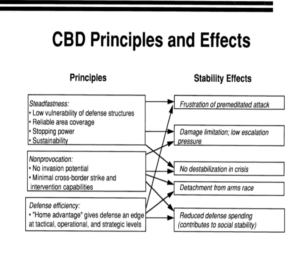
Fundamental Design Principles of Confidence-Building Defense

by Carl Conetta and Lutz Unterseher, 1994.  ➪PDF

A selection of slides as prepared for seminars held in Holland, the Czech Republic, Hungary, and Belarus in 1994. These were used in presentations and included in the seminar briefing book, Confidence-Building Defense: a comprehensive approach to security and stability in the new era.

The seminars were organized and co-sponsored by the Study Group on Alternative Security Policy (SAS) and the Project on Defense Alternatives (PDA).

The principles of Confidence Building Defense remain relevant to the aspirations and strategic interests of nations that have suffered mutual enmity and military standoff and now seek to create the conditions for lasting peace and to reduce the size of their militaries while advancing their essential national security.

Confidence Building Defense

Free Reign for the Sole Superpower?

Project on Defense Alternatives, Boston Review, Vol. 8 No. 6, Dec/Jan 1993-1994.


This article reports on the first Clinton Administration’s Bottom-Up Review (BUR) of defense policy and remains a useful review of the poverty of new thinking in post-Cold War U.S. national security planning.  It is a starting point for evaluating subsequent defense reviews and the many failures of post-Cold War military policy.

Rand’s ‘New Calculus’ and the Impasse of US Defense Restructuring

by Carl Conetta and Charles Knight, PDA Briefing Report #4, August 1993.
➪ HTML   ➪ PDF

Reviews a key planning study contributing to US post-Cold War strategic thinking and force planning, revealing critical shortcomings in the planning scenarios and simulations that continue to shape US defense policy. Individual sections address the “two war” standard of sufficiency, the persistence of “Central Front” logic, and assessments of the requirements for strategic airlift and combat aircraft modernization.

Toward Defensive Restructuring in the Middle East

by Carl Conetta, Charles Knight, and Lutz Unterseher, PDA Research Monograph #1, February 1991.
➪ HTML ➪ PDF

Examines the character of force structure and military conflict in the Middle East and outlines a nonoffensive defense posture for nations in the region. It also draws the implications of such a posture for arms transfers and arms control policy. An appendix reviews the pertinent lessons of the 1990-91 Gulf War.

An edited version of this article appeared in the 01 April 1991 issue of The Bulletin of Peace Proposals (now Security Dialogue).

After Conventional Cuts: New Options for NATO Ground Defense

by Carl Conetta and Charles Knight, Institute for Defense and Disarmament Studies, May 1990.

➪ PDF

The report takes a critical look at late-Cold War plans for defending Western Europe from the Warsaw Pact attack, finding these plans to be both unrealistic and destabilizing. It proceeds to clearly specify a robust alternative area-defense option and then considers standard objections to area-defense concepts.

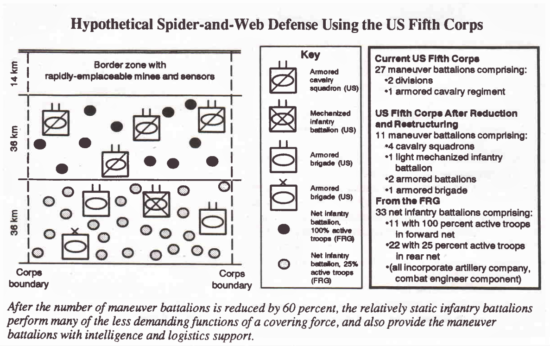
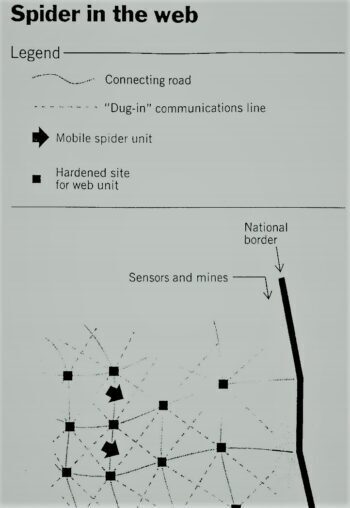
“[L]ooking beyond the current bipolar orientation of central European armies, the adoption by nations in the region of spider-and-web defenses, reconfigured to provide all-around security, would help ensure the necessary military foundation for peaceful political, social, and economic development.

How Low Can NATO Go?

by Carl Conetta and Charles Knight, Defense and Disarmament Alternatives, Institute for Defense & Disarmament Studies, 13 February 1990.  ➪ PDF

For a summary of the contemporary European conventional arms control situation see Thomas K. Longstreth, “The Future of Conventional Arms Control in Europe,” FAS Public Interest Report Vol. 41 No. 2, February 1988  ➪ PDF

spider in web

Defensive Restructuring of Ground Forces in Europe – workshop report

rapporteur, Carl Conetta. A workshop co-sponsored by the Institute for Defense and Disarmament Studies and the RAND Corporation featuring a presentation by Lutz Unterseher, a response by Barry Posen, and participant discussion, Washington, DC, 17 January 1989. PDF

In his presentation Unterseher warned that unless conventional arms reductions in Europe are combined with defensive reductions, they could actually undermine rather than improve stability by increasing both sides’ vulnerability to surprise attack. Posen agreed but judged that any significant shift toward a SAS-type alternative is not now feasible.  Instead, a step-by-step process of bilateral reductions and restructuring might work.

Joint US-Soviet Seminar on Conventional Arms Reductions in Europe

➪ full-text PDF

by Carl Conetta, Conference Report, in Defense and Disarmament Alternatives, the newsletter of the Institute for Defense and Disarmament Studies (IDDS), January 1989.
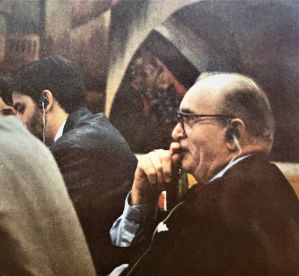
Jonathan Dean in MoscowReport on the September 1988 conference, co-hosted by the Institute for World Economy and International Relations (IMEMO) and Institute for Defense and Disarmament Studies (IDDS), of  Soviet and US arms control and military policy specialists. The report summarizes the exchange regarding problems and prospects for conventional force reductions in Europe.

These meetings happened a little less than two months before President Gorbachev’s historic announcement at the UN in December of 1988 of substantial unilateral reductions and defensive restructuring of Soviet troops in eastern Europe – one of the most significant policy shifts in the process of ending the European Cold War. This international conference likely had more import than most.


The Sometimes You Win and Sometimes You Lose Hypothesis: Some Comments on the Use of Models in Force Comparisons

by Charles Knight, 18 March 1988. PDF

In this previously unpublished paper from 1988, the author reviews various models for simulating war along the Central Front in Germany and their relevance for finding a stable conventional force balance in Europe (and elsewhere.)  Force structures that tend to produce stable outcomes in battlefield simulations are likely to have more deterrent value in the real world.

battle simulation


“[C]omplex models [can] be very useful in distinguishing the conditions (i.e. force structures, tactics, and armaments) that produce chaotic, oscillating, or unstable outcomes from those that produce stable outcomes.
“The outcome of a conflict between balanced forces as currently structured is unknowable and unpredictable. This would seem to support the position that no stable conventional deterrent to war can be built, short of overwhelming superiority.  If that was as far as our analysis went, we [might] end up giving support to flexible response doctrine with its fundamentally unstable nuclear deterrent component. Of course, the favored option is to model restructured conventional forces that can take us out of the chaotic conventional battlefield and give us stable outcomes.”