
by Charles Knight, 05 July 2026. First published as a guest post at Van Jackson‘s Un-Diplomatic, ➪ full-text of PDA version: PDF
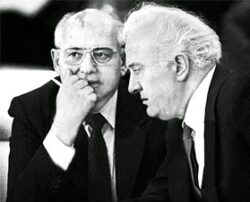
This retrospective focuses on the work of one researcher/thinker from West Germany, Lutz Unterseher. It follows the migration from West to East of his thinking and writing (and that of a network he organized) to Mikhail Gorbachev’s key foreign policy advisers. Once there, this work likely played a role in shaping the particulars of one of the Soviet leader’s most consequential foreign policy decisions.
The story is told less for its historical value than for its value to all who work on the construction of new ideas.
- In what circumstances do new ideas get noticed and made use of by powerful persons and institutions?
- What types and levels of idea development are most likely to gain the attention of national leaders who tend to be relentlessly pragmatic?
- What did the author of this retrospective learn while writing this article?
 Carl Conetta, 12 January 2026 – Full text⇒

 Carl Conetta, 22 January 2025. Full text ⇒
  Carl Conetta, 26 Sept 2024. Full text ⇒
 Carl Conetta, 12 June 2024. Full text ⇒
  Carl Conetta, 31 May 2023. Full text ⇒
  by Carl Conetta, 30 May 2023.
 Carl Conetta, 02 May 2023. see article ⇒
  by Carl Conetta, 02 Feb 2023 – Full report:
  depend on that rationality and restraint? Probably not.
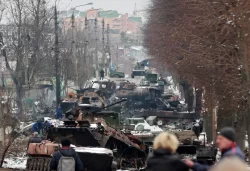 How do the two sides in the Russia-Ukraine conflict compare in terms of personnel and equipment losses? These seemingly objective measures are subject to an intensive propaganda war. This brief analysis examines multiple sources of data to find that the combatants are actually not far apart in the percentage of equipment attrition they have suffered. And Russian personnel fatalities are likely in the range of 3,500 (April 2). Contrary to the messaging of the two sides, both would seem able to sustain combat for a considerable time longer. Unfortunately, as Russian forces have transitioned to a heavier, more firepower-dominant mode of warfare, Ukrainian civilians and civilian infrastructure are suffering more death and destruction. While this might argue for increased emphasis on war containment and diplomatic efforts, the most evocative messaging on the western side emphasizes Russian miscalculation and fumbling, Ukraine’s adept resistance, and the promise of war termination via increased investment in the war.
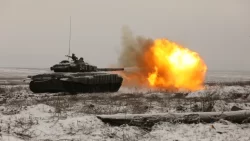 The battle within Ukraine and the USA-Russia contest over it has returned Europe to the darkest, most ominous period of the 1947-1989 Cold War. That this should happen with both the United States and Russia barreling grimly forward reflects a singular failure of diplomacy and common sense. There were two recent points in time when positive leadership might have turned us away from the path of disaster. Fortunately, one of these is not yet foreclosed. The short essay examines them both, asking how did we get here? It concludes with the question: Is it harder to live with autonomy for the Ukrainian rebel areas than it is to face regional war?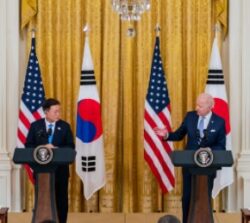
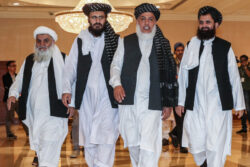
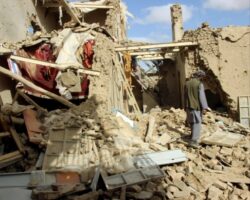


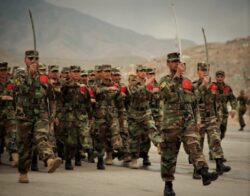 The most serious deficit of the Afghan National Security Forces…is its lack of motivation in comparison to the Taliban. One of the primary lessons unlearned from Vietnam, Iraq, and Afghanistan is that soldiers in the armies we create, train, and equip are simply not willing to fight and die for weak, corrupt, illegitimate governments.
 Argues for a new balance among the various instruments of national power reflecting today’s strategic conditions. Taking a realistic view of security needs, the report advocates a military 20% smaller than today’s. It advances a “discriminate defense” strategy that would focus the military on cost-effective missions and save $550 billion more than official plans over the next decade.