
Symposium: The Role of Force & the Armed Forces in US Foreign Policy — What have we learned?

Security Policy Working Group, 10 April 2008.

  • Andrew Bacevich, “The Origins and Demise of the Bush Doctrine of Preventive War”
  • Carl Conetta, “Out from the House of War: A Litmus for New Leadership in Security Policy” (printable .pdf)
  • David Gold, “How Much Defense Can We Afford? (printable .pdf), as republished in Challenge (Sept/Oct 2008)
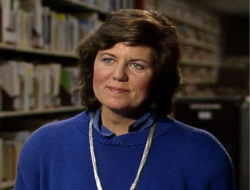
Ideas, Homework, and Message – a testament to Randall Forsberg’s contribution to disarmament

by Charles Knight, Common Dreams, 14 January 2008.  ➪ HTML

Randall “Randy” Watson Forsberg was best known as the creator of the proposal for a Nuclear Freeze, an idea that blossomed into a movement in the early 1980s. In today’s political culture, she would be thought of as a great messenger.  What made Forsberg’s message powerful is its foundation in rigorous research and analysis.

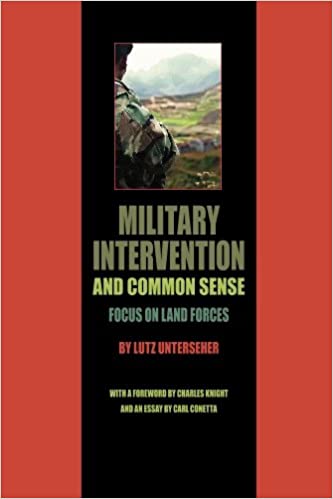
Military Intervention and Common Sense: Focus on Land Forces

by Lutz Unterseher, Berlin-Greifswald: Ryckschau, 2008. Foreward by Charles Knight. Includes a chapter by Carl Conetta, Helicopters in the US wars since 9/11.   PDF  |  order paperback

book cover

[from the Foreward]
“This book…makes a major contribution to undoing the confusion for one class of increasingly likely 21st Century uses of military force. That is, internationally sanctioned military intervention using greater force than traditional peace-keeping and less than ‘war-fighting’.”

A Note on the State of Israel

(HTML version) by Lutz Unterseher, Universities of Osnabrueck and Muenster, November 2007. Focuses on selected aspects of Israel’s military security. It looks at the basic pattern of this country’s recent war against Hezbollah in 2006, and attempts to give a sketch of the problems affecting Israel’s military position today. In addition to objective factors, the subjective side is considered: in the form of impressions gained in casual conversations with Israeli citizens.

War and Poverty, Peace and Prosperity

(HTML version) Conference sponsored by the Economists for Peace and Security, Levy Economics Institute, Bard College, Annandale on Hudson, NY, 30 May – 01 June 2007.  (transcript) Session 4: “Rethinking Post-Cold War US Security Policy: What went wrong?  How do we get it right?” Session co-organized by Carl Conetta of the Project on Defense Alternatives; Moderator: Winslow Wheeler, Strauss Military Reform Project.

No good reason to boost Army, Marine Corps end strength

(printable PDF version) (HTML version) by Carl Conetta, PDA Briefing Report #20, 31 January 2007. The proposal to add 92,000 personnel to US ground forces will combine with other initiatives to greatly increase America’s capacity to sustain large, protracted ground operations overseas. And it will enable an indefinite stay in Iraq. The rationale for this capability misconstrues the lessons of the Iraq war and America’s true security requirements. The memo also reviews recent and possible future deployment patterns.

Resolving Iraq: Progress depends on a short timeline for US troop withdrawal

(printable PDF version) by Carl Conetta, PDA Briefing Memo #40, 18 January 2007.  The memo argues that the large-scale US military presence in Iraq makes sustainable progress toward peace and stability there impossible. It advances an alternative approach to stabilizing Iraq that hinges on a short timeline for US troop withdrawal and a new international effort including Iraq’s neighbors.